8 media monitoring-tools die echte impact tonen
8 media monitoring-tools die echte impact tonen


TL;DR: Media monitoring tools, once glorified clip trackers, are now real media intelligence systems. We highlight the best PR software platforms that’ll help you prove your PR impact to the C-suite in 2026. What matters now isn’t how often you were covered, but whether that media coverage shifted sentiment, shaped reputation, outperformed competitors and boosted business growth.
Key insights:
Today’s business leaders evaluate PR efforts based on real outcomes and business impact, not likes and impressions.
In 2026, it matters more how much of the conversation you own and whether it’s positive than how many times your brand gets mentioned.
AI has transformed media monitoring from reactive tracking to proactive intelligence, surfacing signals humans would otherwise easily miss.
Comparing the top six media monitoring tools shows a clear trend: Tracking media coverage isn’t enough. PR teams need PR tools that make it easy to understand real impact.
Don’t be fooled by gimmicks and features. The right media monitoring tools and approach should closely align with your business goals.
Let’s be honest: the hardest part of PR isn’t getting coverage anymore. It’s proving it mattered.
In fact, 52% of agencies and 51% of in-house comms teams struggle to tie PR back to revenue or business growth. Nearly half report that proving ROI beyond vanity metrics is their biggest challenge.
The PR industry is clearly shifting from activity-based reporting (e.g., impressions, brand mentions, reach) to outcome-based reporting that demonstrates real strategic impact. And this, dear PR.co friends, is exactly where modern PR analytics tools start earning their keep.
What do today’s media monitoring tools do?
Instead of handing you a stack of mentions, today’s media monitoring tools can help tell you what those mentions mean. They can track and analyze coverage sentiment, narrative development and competitive visibility. And, when paired with other PR tools, the software can deliver the kind of intelligence that helps you speak the language of the C-suite.
AI has supercharged this shift: the tech can help you cluster themes, spot early reputational risks and benchmark against competitors at a speed no human team could match.
But, as we note in our breakdown of AI monitoring pitfalls, AI isn’t a replacement for human judgment. It’s an amplifier. The real power lies in combining automated insight with critical thinking.
Which questions can media monitoring tools help answer?
Once you’re clear on the business outcomes your leadership team expects PR to influence (e.g., SOV, brand preference, purchase intent, market penetration, reputation risk), the next step is to ask your media monitoring tool the right questions.
Proven wins turn PR reporting into outcome-level storytelling that company leaders pay attention to.
When media monitoring tools are connected to web analytics, CRM platforms and referral sources, they can help public relations teams answer questionslike:
Did the announcement move demo requests?
Did sentiment recover after a crisis?
Did top-tier coverage drive a competitive advantage?
Are your key messages driving purchase intent?
It’s the difference between saying, “We got 125 mentions,” and confidently reporting, “Our earned coverage contributed to a lift in qualified pipeline leads while strengthening our leadership narrative in two priority markets.”
Is there a PR measurement framework I can use for media monitoring?
Media monitoring tools won’t directly calculate revenue for you, but they do reveal whether the levers that drive revenue are moving: the shifts in sentiment, visibility, narrative traction and competitive presence that correlate with real business outcomes.
The best media monitoring tools provide PR leaders with the evidence they need to defend budgets, align with marketing and demonstrate value without relying on inflated impressions or wishful thinking.
These are the metrics that tell a meaningful business story:
Metric | What it shows | Why it matters |
Share of Voice (SOV) | Visibility vs competitors | Fastest signal of category leadership |
Sentiment trends over time | Public perception trajectory | Flags reputation movement early |
Message pull-through | Narrative adoption | Connects coverage to strategy |
Outlet quality | Influence weighting | Separates noise from meaningful impact |
Change over time | Momentum | Shows progress, not isolated wins |
Of course, different organizations lean on different metrics depending on size and maturity. This is something we heard repeatedly when we took this question to the Spin Sucks Slack community.
As Dr. Brandi Sims, CEO of Brandinc PR, notes: “For luxury and established brands, media impressions tend to be the most impactful. For startups and smaller brands, Earned Media Value (EMV) and Media Impact Value (MIV) are often more compelling. These metrics help quantify the ROI of earned, non-paid media by translating coverage into a dollar value.”

Building on that theme, another strong perspective from the Spin Sucks community came from senior communications advisor and educator Sukhi Sahni, who believes SOV is still the most important metric.
“I would choose a positive SOV within quality outlets that align with our target audience. This KPI is familiar to most business leaders. The next evolution of this is the share of answers: how are you showing up to questions being asked in large language models (LLMs).”
What can media monitoring tools actually measure?
Media monitoring for PR extends far beyond mention counting. Modern tools, combined with business data, measure four dimensions that turn monitoring into real media intelligence:
1. Visibility & reach
These metrics show where your stories land, which outlets matter and how you compare to competitors. Knowing this is essential for brand reputation management and category visibility.
2. Sentiment and public perception
Modern sentiment engines track directional shifts in tone, trust and narrative association. But sentiment isn’t just about what gets published, it’s also about what doesn’t.
“Keeping a running count of all the negative stories that were never published isn’t a very common metric, but it truly shows the value of PR,” Sahni notes. “This showcases the skills of communications leaders in navigating storylines and reporter relationships.”
3. Real-time alerts and risk detection
Of course, knowing what is being said is one thing; knowing when it’s happening is another entirely. For many companies, that timing edge matters most.
As Dr. Sims shared: “Timeliness is everything in PR, and alerts enable real-time awareness that can make or break a campaign or a reputation. They significantly reduce the need for manual searching and allow teams to respond quickly to both positive momentum and potential issues before they escalate.”
4. Lean monitoring for small teams
Automation gives small PR teams enterprise-level intelligence: filtering noise, summarizing industry trends and reducing manual scanning.
Together, these four capabilities turn media monitoring into a strategic intelligence function.
Which are the best media monitoring tools out there?
If you’re searching for the perfect media monitoring tool, don’t just stop at the features list. The real question you should ask yourself is this: what outcomes does this tool help us prove?
The best software tools don’t just capture coverage, they clarify why it matters, what decisions it informs and how it contributes to the business. The eight tools below all tie signals to strategy and intelligence, and action to intelligence.
Tool | Description | Best for |
AI-assisted media monitoring built directly into your PR workflow. The tool automatically collects mentions, enriches them with context, and connects them to your press releases and campaigns. | PR.co highlights the coverage that matters most, tracks industry trends such as sentiment shifts and SOV and enables measurable reporting. Teams can set custom alerts, integrate with analytics tools and funnel coverage into reporting systems to demonstrate how earned media supports narrative traction, reputation goals and strategic outcomes. | |
This enterprise-level AI intelligence platform monitors global news, social, broadcast and regulatory sources with entity-level sentiment and context. | Best for reputation intelligence, competitive benchmarking and risk detection. Strongest for macro narrative and sentiment analysis. | |
This full media intelligence suite covers online news, social, broadcast, influencers and podcasts. If you’re comparing Meltwater vs. PR.co, check out our side-by-side comparison, or explore our top picks for Meltwater alternatives. | Ideal for big brands that seek cross-channel visibility, SOV and integrated earned and social insights. Great for spotting industry trends and tracking competitors. | |
An enterprise media monitoring and distribution tool with a global journalist database and deep analytics across formats and markets. If you're considering Cision vs. PR.co, check out our side-by-side comparison and our top picks of Cision alternatives. | Best for global teams that manage complex, multinational PR. Strong at narrative adoption and enterprise-grade reporting. | |
An AI-powered online and social monitoring tool that tracks mentions, sentiment, trends and reach across digital channels. | Designed for lean teams that need fast online reputation monitoring and real-time alerts for social media monitoring. It delivers simple, quick insights into brand health. | |
Integrated real-time monitoring across news, social, broadcast and print with advanced analytics and customizable dashboards. | Strong for real-time intelligence, sentiment shifts and cross-format media intelligence, including social media channels. Good for teams seeking a consolidated monitoring hub. | |
Earned distribution channel that helps maximize reach by enabling native, non-sponsored placements with trusted publishers. | Best for PR professionals who need to show how their efforts drive awareness and visibility (a key part of demonstrating business value). | |
A platform that provides media intelligence, AI-powered media analytics, and media monitoring solutions. | Ideal for PR professionals who need to answer strategic questions such as which messages resonate, who influences key audiences, and how media presence connects to business outcomes. |
How do I choose the right media monitoring approach?
The key is to match the media monitoring technology to your team’s size, goals and reporting expectations. Ask yourself:
What outcomes must PR influence: awareness, sentiment, narrative leadership and/or revenue?
Do we need real-time alerts or weekly summaries?
How much analysis can our team realistically support?
Should monitoring integrate directly with publishing and reporting workflows?
Do we need cross-market, cross-channel or competitor monitoring?
A great media monitoring strategy makes your key signals unmistakable.
Insight happens when monitoring meets workflow
It’s relatively easy to track mentions. It’s much harder to extract meaningful insights from them.
That’s why the most effective media monitoring approach doesn’t involve a separate dashboard you check when you have a gap. It involves a system that lives where you already work, feeds your strategic thinking and helps you answer the questions leadership really cares about.
With PR.co’s media monitoring tool, coverage, insights and reporting live in the same place as your stories, which makes it easier to track impact, tie back to your PR analytics and report with confidence.
Instead of overwhelming you with raw mentions, our platform filters out unrelated content, surfaces only the most relevant coverage, and enriches each item with ready-to-use context, so you can see why a story matters at a glance.
Discover how AI-assisted media monitoring can transform your PR strategy: schedule a chat to find out more.
FAQs about media monitoring in PR
1. What’s the difference between media monitoring and social listening?
Media monitoring tracks earned media coverage across online news sites, online publications, blogs, podcasts and other third-party media channels.
Social listening tracks conversational signals across social media platforms. Both matter, but they answer different questions: one is about narrative and influence, the other about audience conversation and behavior.
2. Can media monitoring tools prove ROI?
Not directly, but they enable ROI analysis by surfacing the signals that correlate with business outcomes: improved sentiment in target markets, share of voice gains in competitive battles, message pull-through during product launches, or reputation recovery after issues.
3. How accurate is automated sentiment analysis?
It’s directionally accurate, especially when viewed as a trend rather than a single datapoint. Tools can misread nuance, humor or irony, which is why sentiment is best paired with human context. The combination gives PR teams the clearest picture of how perceptions evolve over time.
TL;DR: Media monitoring tools, once glorified clip trackers, are now real media intelligence systems. We highlight the best PR software platforms that’ll help you prove your PR impact to the C-suite in 2026. What matters now isn’t how often you were covered, but whether that media coverage shifted sentiment, shaped reputation, outperformed competitors and boosted business growth.
Key insights:
Today’s business leaders evaluate PR efforts based on real outcomes and business impact, not likes and impressions.
In 2026, it matters more how much of the conversation you own and whether it’s positive than how many times your brand gets mentioned.
AI has transformed media monitoring from reactive tracking to proactive intelligence, surfacing signals humans would otherwise easily miss.
Comparing the top six media monitoring tools shows a clear trend: Tracking media coverage isn’t enough. PR teams need PR tools that make it easy to understand real impact.
Don’t be fooled by gimmicks and features. The right media monitoring tools and approach should closely align with your business goals.
Let’s be honest: the hardest part of PR isn’t getting coverage anymore. It’s proving it mattered.
In fact, 52% of agencies and 51% of in-house comms teams struggle to tie PR back to revenue or business growth. Nearly half report that proving ROI beyond vanity metrics is their biggest challenge.
The PR industry is clearly shifting from activity-based reporting (e.g., impressions, brand mentions, reach) to outcome-based reporting that demonstrates real strategic impact. And this, dear PR.co friends, is exactly where modern PR analytics tools start earning their keep.
What do today’s media monitoring tools do?
Instead of handing you a stack of mentions, today’s media monitoring tools can help tell you what those mentions mean. They can track and analyze coverage sentiment, narrative development and competitive visibility. And, when paired with other PR tools, the software can deliver the kind of intelligence that helps you speak the language of the C-suite.
AI has supercharged this shift: the tech can help you cluster themes, spot early reputational risks and benchmark against competitors at a speed no human team could match.
But, as we note in our breakdown of AI monitoring pitfalls, AI isn’t a replacement for human judgment. It’s an amplifier. The real power lies in combining automated insight with critical thinking.
Which questions can media monitoring tools help answer?
Once you’re clear on the business outcomes your leadership team expects PR to influence (e.g., SOV, brand preference, purchase intent, market penetration, reputation risk), the next step is to ask your media monitoring tool the right questions.
Proven wins turn PR reporting into outcome-level storytelling that company leaders pay attention to.
When media monitoring tools are connected to web analytics, CRM platforms and referral sources, they can help public relations teams answer questionslike:
Did the announcement move demo requests?
Did sentiment recover after a crisis?
Did top-tier coverage drive a competitive advantage?
Are your key messages driving purchase intent?
It’s the difference between saying, “We got 125 mentions,” and confidently reporting, “Our earned coverage contributed to a lift in qualified pipeline leads while strengthening our leadership narrative in two priority markets.”
Is there a PR measurement framework I can use for media monitoring?
Media monitoring tools won’t directly calculate revenue for you, but they do reveal whether the levers that drive revenue are moving: the shifts in sentiment, visibility, narrative traction and competitive presence that correlate with real business outcomes.
The best media monitoring tools provide PR leaders with the evidence they need to defend budgets, align with marketing and demonstrate value without relying on inflated impressions or wishful thinking.
These are the metrics that tell a meaningful business story:
Metric | What it shows | Why it matters |
Share of Voice (SOV) | Visibility vs competitors | Fastest signal of category leadership |
Sentiment trends over time | Public perception trajectory | Flags reputation movement early |
Message pull-through | Narrative adoption | Connects coverage to strategy |
Outlet quality | Influence weighting | Separates noise from meaningful impact |
Change over time | Momentum | Shows progress, not isolated wins |
Of course, different organizations lean on different metrics depending on size and maturity. This is something we heard repeatedly when we took this question to the Spin Sucks Slack community.
As Dr. Brandi Sims, CEO of Brandinc PR, notes: “For luxury and established brands, media impressions tend to be the most impactful. For startups and smaller brands, Earned Media Value (EMV) and Media Impact Value (MIV) are often more compelling. These metrics help quantify the ROI of earned, non-paid media by translating coverage into a dollar value.”
Building on that theme, another strong perspective from the Spin Sucks community came from senior communications advisor and educator Sukhi Sahni, who believes SOV is still the most important metric.
“I would choose a positive SOV within quality outlets that align with our target audience. This KPI is familiar to most business leaders. The next evolution of this is the share of answers: how are you showing up to questions being asked in large language models (LLMs).”
What can media monitoring tools actually measure?
Media monitoring for PR extends far beyond mention counting. Modern tools, combined with business data, measure four dimensions that turn monitoring into real media intelligence:
1. Visibility & reach
These metrics show where your stories land, which outlets matter and how you compare to competitors. Knowing this is essential for brand reputation management and category visibility.
2. Sentiment and public perception
Modern sentiment engines track directional shifts in tone, trust and narrative association. But sentiment isn’t just about what gets published, it’s also about what doesn’t.
“Keeping a running count of all the negative stories that were never published isn’t a very common metric, but it truly shows the value of PR,” Sahni notes. “This showcases the skills of communications leaders in navigating storylines and reporter relationships.”
3. Real-time alerts and risk detection
Of course, knowing what is being said is one thing; knowing when it’s happening is another entirely. For many companies, that timing edge matters most.
As Dr. Sims shared: “Timeliness is everything in PR, and alerts enable real-time awareness that can make or break a campaign or a reputation. They significantly reduce the need for manual searching and allow teams to respond quickly to both positive momentum and potential issues before they escalate.”
4. Lean monitoring for small teams
Automation gives small PR teams enterprise-level intelligence: filtering noise, summarizing industry trends and reducing manual scanning.
Together, these four capabilities turn media monitoring into a strategic intelligence function.
Which are the best media monitoring tools out there?
If you’re searching for the perfect media monitoring tool, don’t just stop at the features list. The real question you should ask yourself is this: what outcomes does this tool help us prove?
The best software tools don’t just capture coverage, they clarify why it matters, what decisions it informs and how it contributes to the business. The eight tools below all tie signals to strategy and intelligence, and action to intelligence.
Tool | Description | Best for |
AI-assisted media monitoring built directly into your PR workflow. The tool automatically collects mentions, enriches them with context, and connects them to your press releases and campaigns. | PR.co highlights the coverage that matters most, tracks industry trends such as sentiment shifts and SOV and enables measurable reporting. Teams can set custom alerts, integrate with analytics tools and funnel coverage into reporting systems to demonstrate how earned media supports narrative traction, reputation goals and strategic outcomes. | |
This enterprise-level AI intelligence platform monitors global news, social, broadcast and regulatory sources with entity-level sentiment and context. | Best for reputation intelligence, competitive benchmarking and risk detection. Strongest for macro narrative and sentiment analysis. | |
This full media intelligence suite covers online news, social, broadcast, influencers and podcasts. If you’re comparing Meltwater vs. PR.co, check out our side-by-side comparison, or explore our top picks for Meltwater alternatives. | Ideal for big brands that seek cross-channel visibility, SOV and integrated earned and social insights. Great for spotting industry trends and tracking competitors. | |
An enterprise media monitoring and distribution tool with a global journalist database and deep analytics across formats and markets. If you're considering Cision vs. PR.co, check out our side-by-side comparison and our top picks of Cision alternatives. | Best for global teams that manage complex, multinational PR. Strong at narrative adoption and enterprise-grade reporting. | |
An AI-powered online and social monitoring tool that tracks mentions, sentiment, trends and reach across digital channels. | Designed for lean teams that need fast online reputation monitoring and real-time alerts for social media monitoring. It delivers simple, quick insights into brand health. | |
Integrated real-time monitoring across news, social, broadcast and print with advanced analytics and customizable dashboards. | Strong for real-time intelligence, sentiment shifts and cross-format media intelligence, including social media channels. Good for teams seeking a consolidated monitoring hub. | |
Earned distribution channel that helps maximize reach by enabling native, non-sponsored placements with trusted publishers. | Best for PR professionals who need to show how their efforts drive awareness and visibility (a key part of demonstrating business value). | |
A platform that provides media intelligence, AI-powered media analytics, and media monitoring solutions. | Ideal for PR professionals who need to answer strategic questions such as which messages resonate, who influences key audiences, and how media presence connects to business outcomes. |
How do I choose the right media monitoring approach?
The key is to match the media monitoring technology to your team’s size, goals and reporting expectations. Ask yourself:
What outcomes must PR influence: awareness, sentiment, narrative leadership and/or revenue?
Do we need real-time alerts or weekly summaries?
How much analysis can our team realistically support?
Should monitoring integrate directly with publishing and reporting workflows?
Do we need cross-market, cross-channel or competitor monitoring?
A great media monitoring strategy makes your key signals unmistakable.
Insight happens when monitoring meets workflow
It’s relatively easy to track mentions. It’s much harder to extract meaningful insights from them.
That’s why the most effective media monitoring approach doesn’t involve a separate dashboard you check when you have a gap. It involves a system that lives where you already work, feeds your strategic thinking and helps you answer the questions leadership really cares about.
With PR.co’s media monitoring tool, coverage, insights and reporting live in the same place as your stories, which makes it easier to track impact, tie back to your PR analytics and report with confidence.
Instead of overwhelming you with raw mentions, our platform filters out unrelated content, surfaces only the most relevant coverage, and enriches each item with ready-to-use context, so you can see why a story matters at a glance.
Discover how AI-assisted media monitoring can transform your PR strategy: schedule a chat to find out more.
FAQs about media monitoring in PR
1. What’s the difference between media monitoring and social listening?
Media monitoring tracks earned media coverage across online news sites, online publications, blogs, podcasts and other third-party media channels.
Social listening tracks conversational signals across social media platforms. Both matter, but they answer different questions: one is about narrative and influence, the other about audience conversation and behavior.
2. Can media monitoring tools prove ROI?
Not directly, but they enable ROI analysis by surfacing the signals that correlate with business outcomes: improved sentiment in target markets, share of voice gains in competitive battles, message pull-through during product launches, or reputation recovery after issues.
3. How accurate is automated sentiment analysis?
It’s directionally accurate, especially when viewed as a trend rather than a single datapoint. Tools can misread nuance, humor or irony, which is why sentiment is best paired with human context. The combination gives PR teams the clearest picture of how perceptions evolve over time.
Blijf vooroplopen in PR & comms
Ontvang expertinzichten over PR, communicatie en AI in je inbox.
On this page
Gepubliceerd
Bijgewerkt op
Geschreven door
Beoordeeld door
Genoten van het artikel?
Ontvang de beste nieuwsbrief voor Nederlandse pr-professionals
Ontvang expertinzichten over PR, communicatie en AI in je inbox.
15-min demo
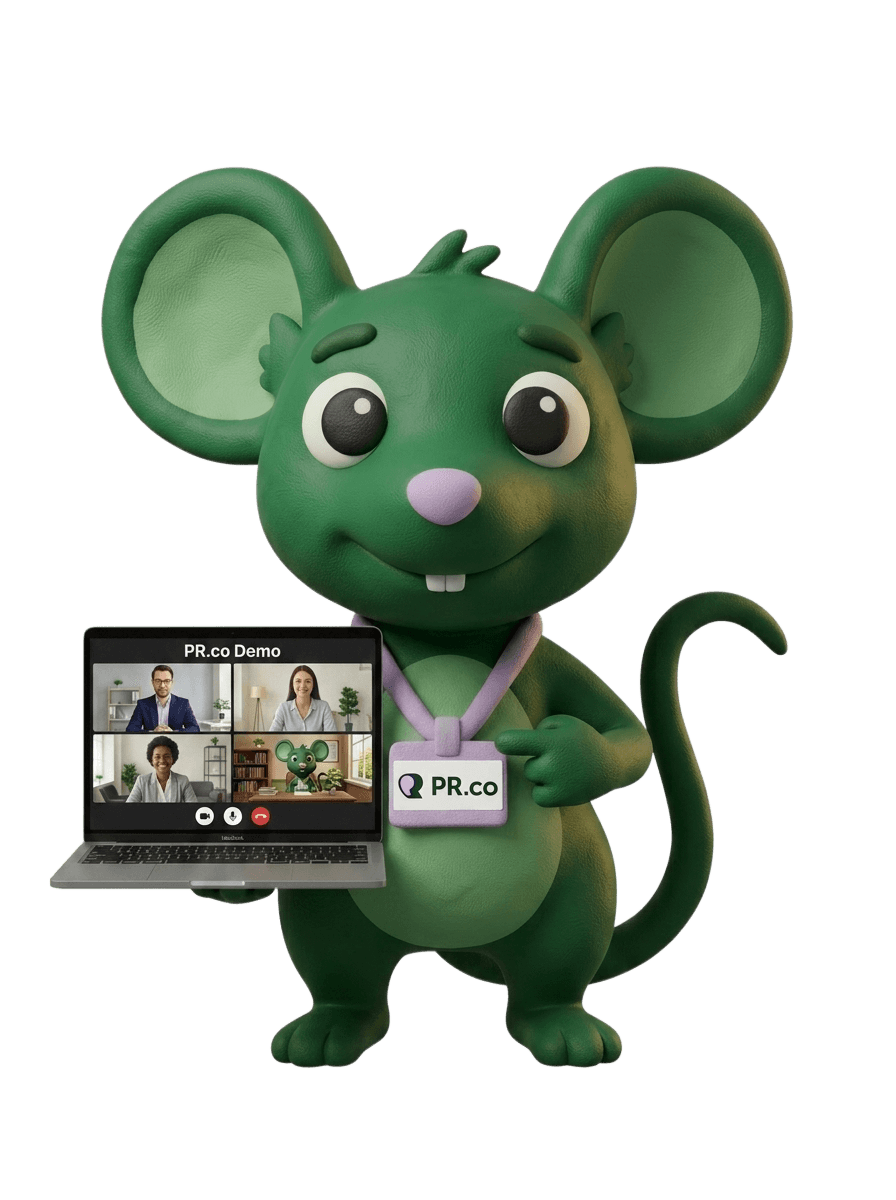
Ontdek PR.co
Ontdek hoe grote PR-teams complexe workflows oplossen met PR.co. Geen fluff — gewoon een kort, inzichtelijk gesprek om te zien hoe we kunnen helpen.
4.7
Ontdek PR.co
Ontdek hoe grote PR-teams complexe workflows oplossen met PR.co. Geen fluff — gewoon een kort, inzichtelijk gesprek om te zien hoe we kunnen helpen.
4.7
15-min demo
Ontdek PR.co
Ontdek hoe grote PR-teams complexe workflows oplossen met PR.co. Geen fluff — gewoon een kort, inzichtelijk gesprek om te zien hoe we kunnen helpen.