
7 Online Newsroom Strategies for 2026


TL;DR: In the AI-saturated internet of 2026, your online newsroom must evolve from a static archive into a “truth signal.” This article shares seven tactics to keep your brand discoverable and credible: GEO/AEO, verified data vaults, SME access, raw assets, zero-click content, always-on updates and niche distribution.
Key insights:
In 2026, brands will win by being a verified, structured, always-on source of truth.
Because hallucinated stats are everywhere, journalists and AI agents increasingly rely on downloadable primary-source data.
Over-produced corporate material can look AI-generated. In contrast, unedited footage, behind-the-scenes media, ambient audio and multi-format assets can help prove “this actually happened.”
A targeted niche outlet, such as Substack or a specialist blog, can outperform major news outlets.
Newsrooms with curated beat sections and tailored assets are the way forward.
Right now, the internet is a messy place. AI-generated content is everywhere, journalists drown in the noise, and your carefully crafted press releases compete with millions of generic articles that sound just credible enough to confuse everyone, including the LLMs.
For PR, communications and marketing pros who work with small brands and limited budgets, this presents a real challenge: How do you get attention in a world of distractions, especially when enterprise brands keep stealing the show?
The solution lies in shifting your online newsroom from an afterthought or neglected content archive into a living, breathing “truth signal”. In other words, a verified, structured, always-on source that humans and machines can trust.
But where to start? Right here, with these seven key tactics for building an online newsroom strategy that works in 2026.
1. Optimize for GEO and AEO
Remember when SEO was the golden ticket to audience attention? Well, meet its evolved cousins: GEO (Generative Engine Optimization) and AEO (Answer Engine Optimization). AI tools like ChatGPT, Claude and Google AI Overviews are now the gatekeepers between your brand and your target audience. If AI platforms and search engines can’t read your content, you don’t exist.
The fix?
Make your newsroom content machine-readable. Use schema, structure, clear H1/H2 styling hierarchies, strong digital asset management and “answer-first” formatting.
Write in Q&A style with clear, authoritative answers that provide key facts in the first sentence, rather than burying them several paragraphs in.
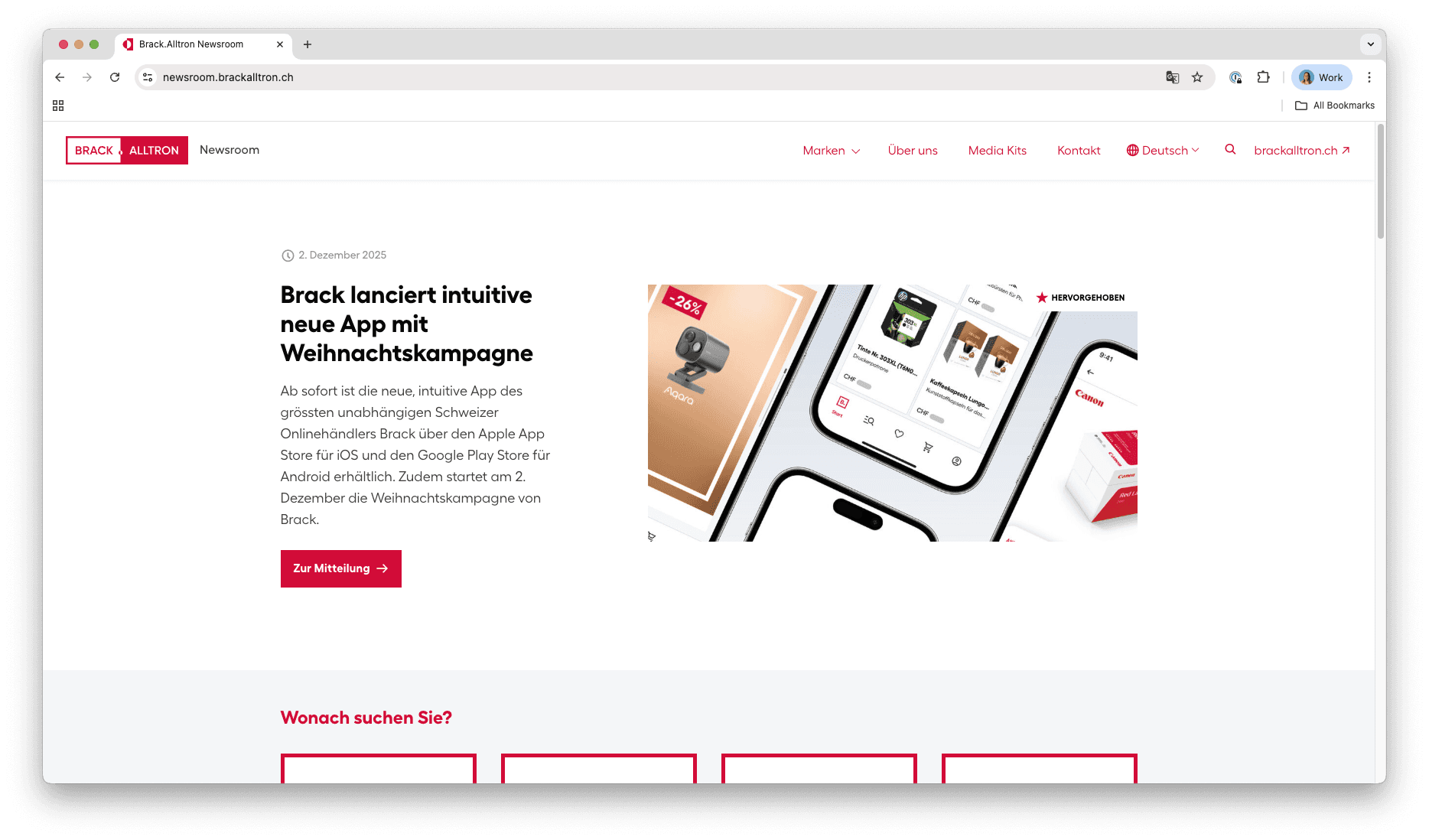
Lukas Keller, PR lead at Swiss e-commerce group Brack.Alltron, saw this shift firsthand during the company's leadership event at Google Zurich. There, Google previewed its upcoming AI-powered search experience and demonstrated how brand queries are now answered, not by scanning the open web broadly, but by pulling from a small set of trusted primary sources.
When Brack.Alltron’s name was entered into the AI search mode, the result made one thing clear: the company’s online newsroom was the primary source AI used to understand and describe the brand, alongside its Wikipedia entry and corporate website.
“Our online newsroom has become the top source AI relies on to understand our brand. That’s why structured, up-to-date newsroom content is no longer optional. It directly determines whether you’re visible in AI search,” Lukas explains.
Our article on “7 ways to structure a press release” unpacks this process in finer detail.
2. Build a vault of verified data
In the era of AI hallucinations (where AI models make up statistics that sound plausible), raw data is gold for journalists and AI agents alike.
But how do you make your data easily accessible? Via your online newsroom’s dedicated data vault. Include downloadable CSV files, interactive charts, year-on-year comparisons and “quick fact” infographics. When you make claims such as “30% growth,” provide the actual numbers. When you announce market leadership, show the methodology behind it.
Just as importantly, don’t rely solely on third-party sources or generic industry figures. Investing in your own data gathering. Even simple surveys, benchmarking studies or usage analytics give you something journalists and content creators actively seek out for their own publications and social feeds.
Building a vault of verified data is about becoming the definitive source on a topic, especially critical in investigative journalism. Journalists must fact-check and verify AI-generated drafts against primary sources. If your data is structured, downloadable and clearly attributed, you become that source. Plus, AI models can ingest, process and cite structured data far more reliably than prose.
More about this in our article on “how to get your brand cited by AI.”
3. Create a subject matter expert (SME) marketplace
Journalists are tired of quotes that could have been written by anyone (or anything). They want authentic insight from years of experience and genuine human intuition.
Your company’s subject-matter experts (SMEs) are your secret weapon in the war against generic AI content. Use them to transform your online newsroom into the go-to source for thought leaders.
Include features such as:
Real-time availability status of your SMEs.
Preferred contact methods and typical response times for media inquiries.
High-quality headshots and up-to-date bios.
Specific topics each expert can speak to (think “expert beats”).
Video and audio samples of past interviews.
Make it super easy for a reporter to book a 10-minute online chat or request a quote from someone who actually knows what they’re talking about. In 2026, access to real expertise is a major competitive advantage.
4. Prioritize raw, high-quality assets
In 2026, polished corporate content triggers skepticism. If it’s too perfect and processed, it’s likely to come across as AI-generated, even if it’s not.
In contrast, a content library of unedited, high-definition B-roll brand footage within your online newsroom builds authenticity. Include behind-the-scenes footage, wide shots, ambient audio, clips from speeches and all the unprofessional, human-captured content that proves your product launch or big event actually happened.
Doing this, along with providing assets in multiple formats, gives journalists easy building blocks for their stories. And easy almost always means better coverage.
5. Shift to zero-click content
Harsh truth: very few readers click through to your full website. Most readers, and certainly journalists working on tight deadlines, consume information where they find it (e.g., in their inboxes or on social feeds).
So, how do you meet your target audience where they’re at, especially at a time when they’re distracted, overwhelmed and reliant on AI assistants to pre-digest information?
Start with two small actions that can have a big impact:
Write headlines that tell the full story. For example: “Acme Corp achieves carbon neutrality across all 47 facilities, three years ahead of schedule” beats “Acme Corp announces sustainability milestone.” If an AI model had to summarize your press release in one sentence without reading past the headline, would it get it right? That’s your goal.
Include social-ready snippets. These are pre-written pieces of content that can be copied directly into newsletters, LinkedIn posts or other channels, while keeping your brand language and core messaging intact.
6. Maintain an always-on pulse feed
If you put all your effort into big announcements, your newsroom looks like a ghost town 90% of the time (and like a firehose the other 10%).
Instead, maintain a chronological “pulse feed” of short news snippets, e.g., updates on new hires, product iterations, cultural milestones, community wins and customer stories. Not every update needs a full press release. A few short paragraphs with a photo work just fine.
This consistent drumbeat of activity accomplishes three things:
It keeps your newsroom fresh, increasing the likelihood that your site is revisited more often by search crawlers and AI discovery bots.
It gives journalists material for feature stories, not just news hits.
It builds long-term brand journalism credibility. You’re not just shouting for coverage. You’re documenting your journey.
The beauty of brand journalism is that it works even when mainstream media ignores you. Your owned media channels serve as a record of your brand’s evolution, searchable and citable by anyone researching your company or industry.
7. Focus on niche-first distribution
The era of mass-blasting generic press releases to 10,000 contacts is over. In 2026, influence doesn’t come from one big megaphone, but from many smaller, trusted voices.
A Substack newsletter with 5,000 hyper-engaged fintech executives might be worth more than a brief mention in a general business publication with 500,000 passive readers.
Use your newsroom to cater to independent and niche publishers:
Create dedicated, curated sections that aggregate all your relevant content for specific beats (for example, regulatory compliance or supply chain sustainability).
Offer exclusive previews to data drops or availability to speak with company SMEs.
This approach is about precision rather than volume, and it means actually knowing who covers your space and what they care about. But for overworked PR teams, it’s also more efficient. A few meaningful conversations are always better than 100s of ignored emails.
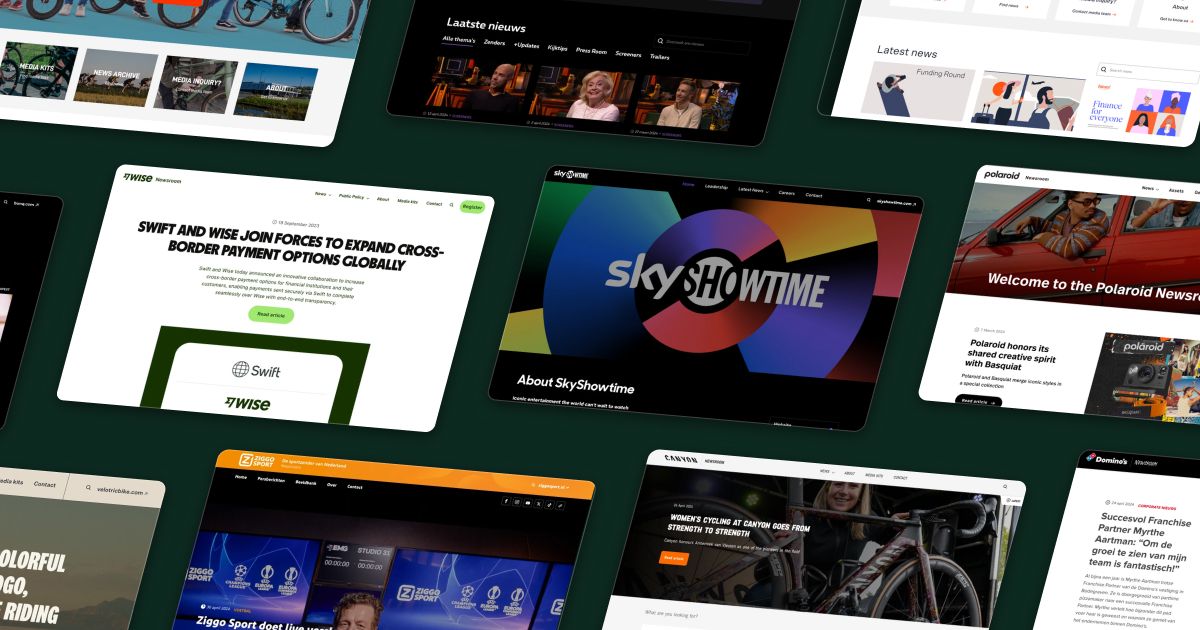
Examples of effective online newsrooms
Velotric
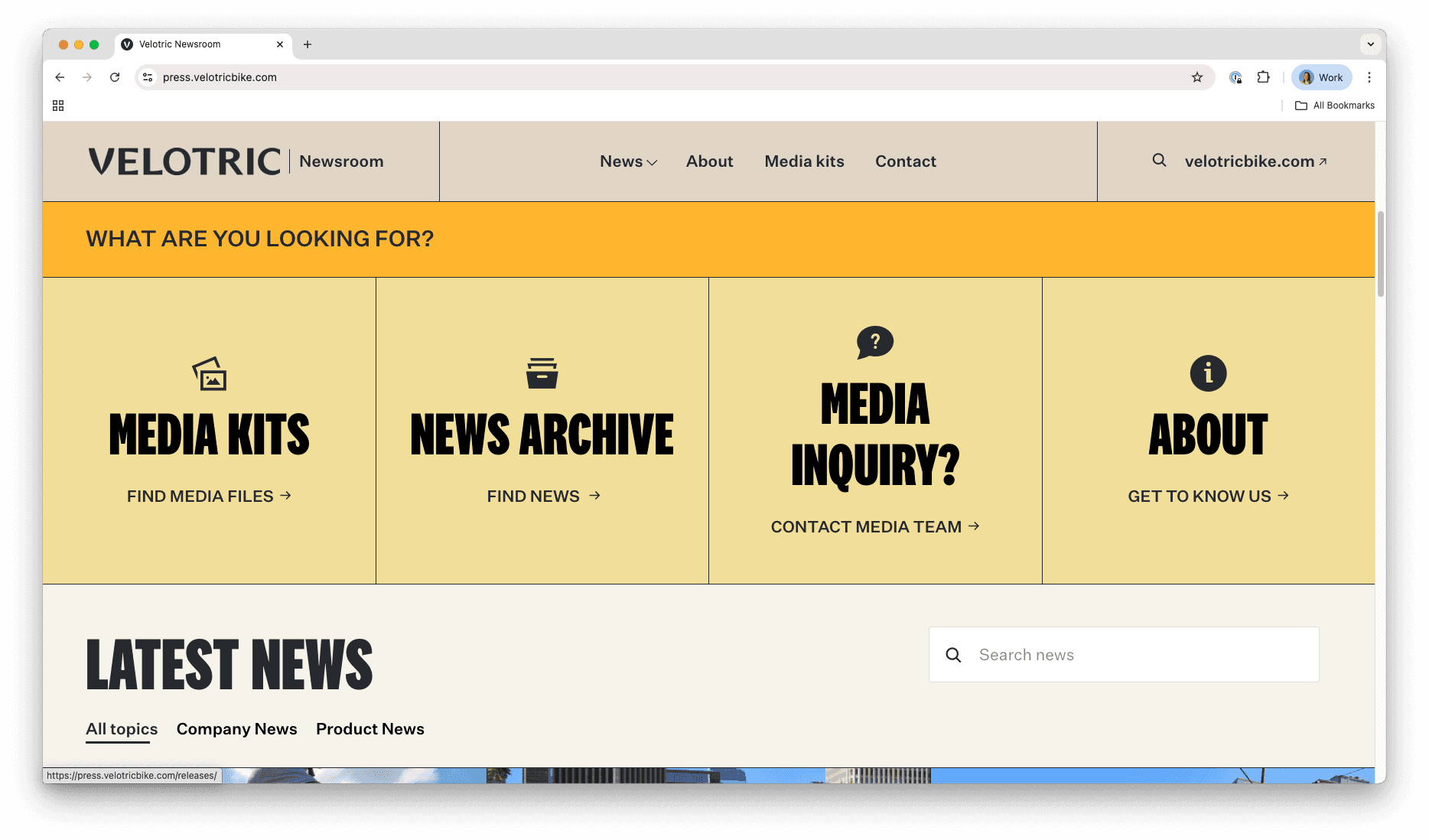
Velotric’s newsroom is built around the principle of consistency. It uses the same navigation and visual language as the brand’s online store, so visitors never feel like they’ve left the Velotric universe. This seamless experience reinforces trust and credibility, proving that every brand touchpoint (newsroom included) plays a role in shaping perception.
Polaroid
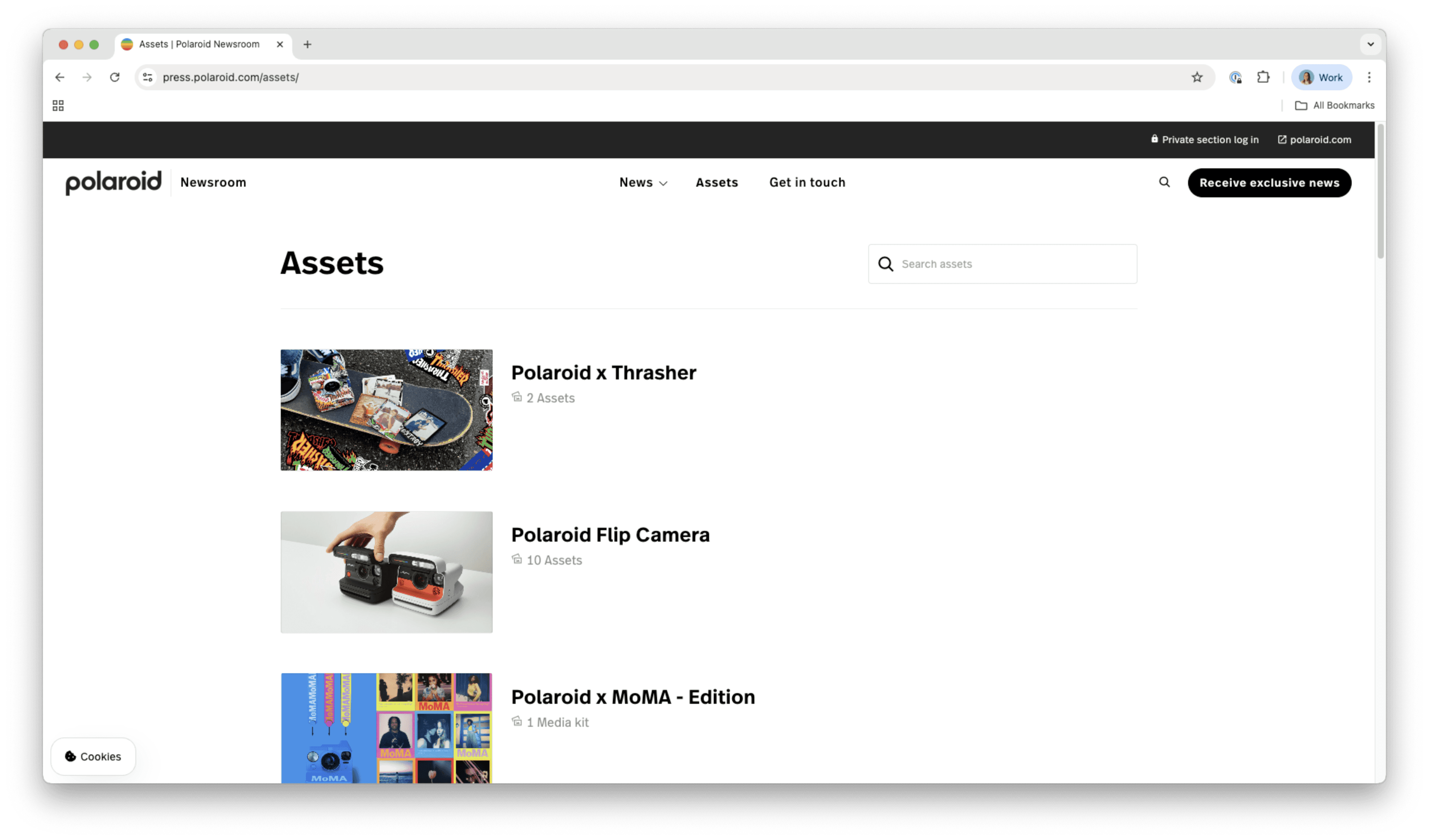
Polaroid proves that simplicity still wins. Their newsroom organizes press assets into clearly structured folders by product, eliminating the need to hunt for the right image. For journalists working against tight deadlines, this frictionless access is so important. They can simply grab a high-resolution photo, download, and continue writing their story.
Canyon
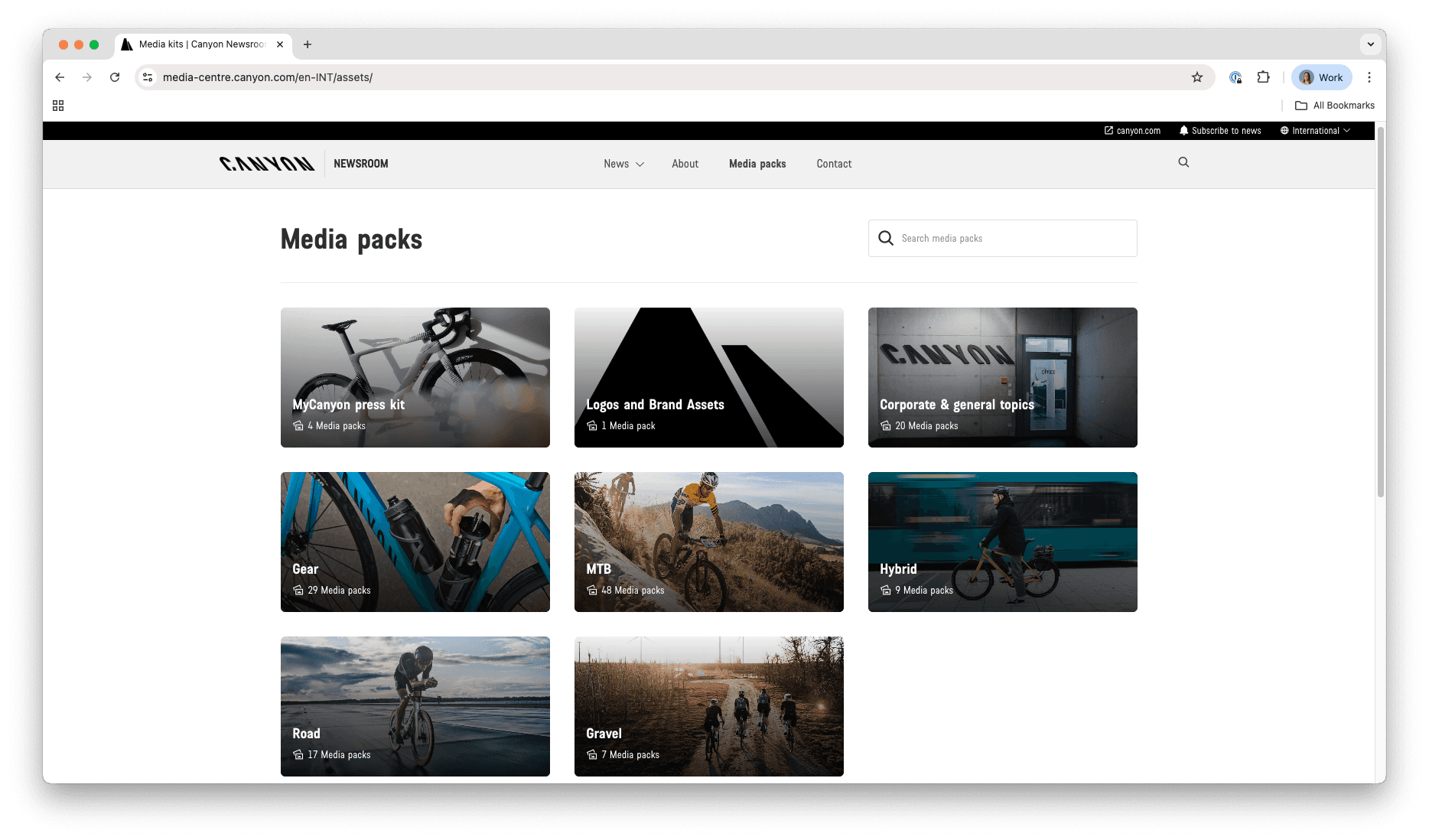
Canyon takes media accessibility one step further by grouping press kits by product category, such as mountain or gravel bikes. Their brand assets such as logos are kept front and center, making the newsroom feel like a true self-service hub. Everything a journalist (or any other stakeholder) needs to tell a compelling story is pre-packaged and ready to use.
Lynk & Co
Lynk & Co’s newsroom stands out for its strong focus on localized communication. Instead of relying on a single global news feed, they publish market-specific news in multiple languages, ensuring journalists and stakeholders get content that’s truly relevant to their region. Beyond improving the human experience, this translated content also boosts AI visibility, making it easier for search engines and AI assistants to surface Lynk & Co’s stories in local queries and summaries.
Here's why translation matters more than ever in the age of AI.

Twotone
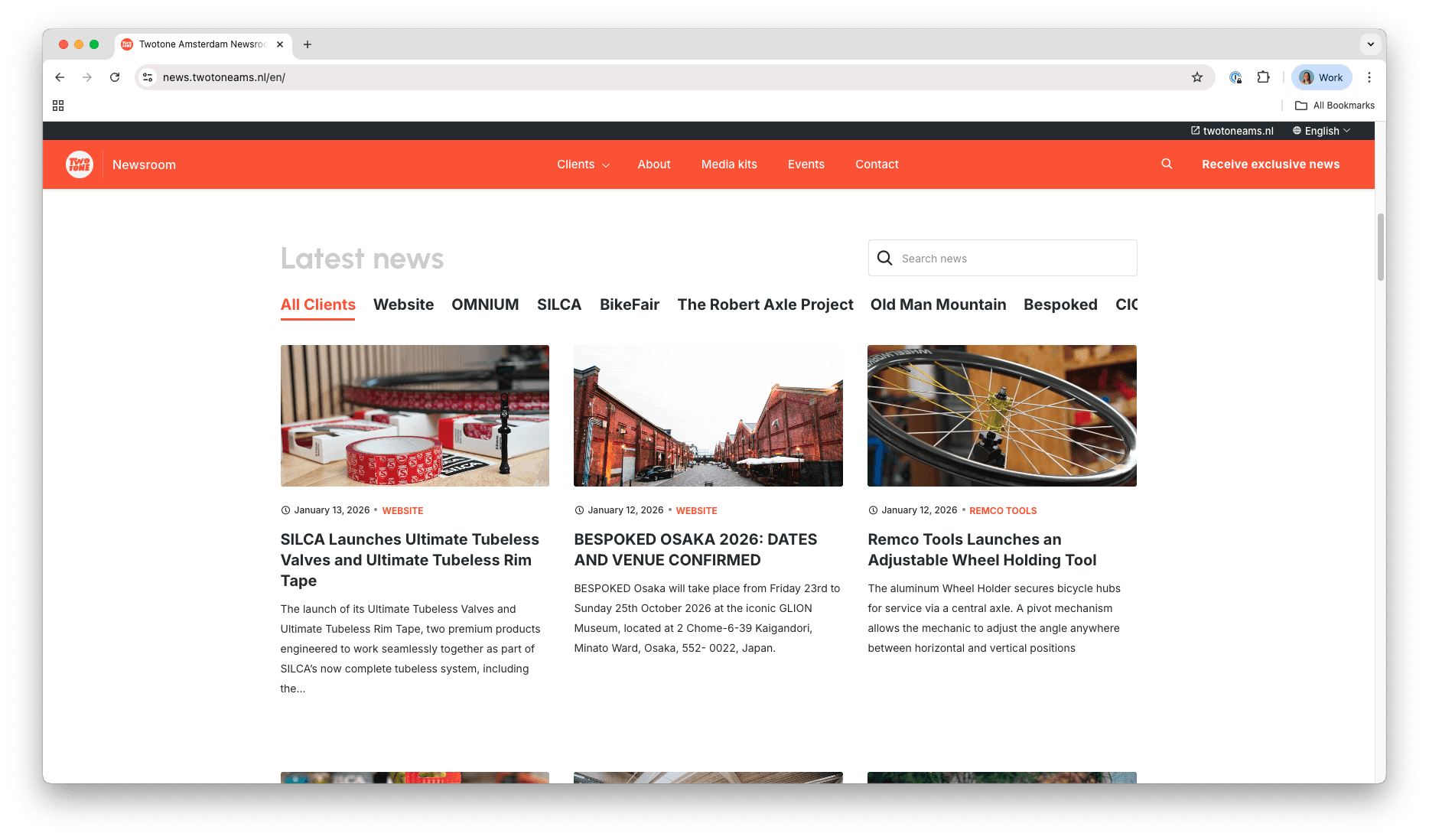
As an agency deeply embedded in the cycling world, Twotone has built a newsroom that reflects its ecosystem approach. Content is organized using tags, allowing each brand’s news to live independently while remaining connected. A journalist searching for one bike story may easily discover several others, turning the newsroom into a central hub that encourages exploration and cross-pollination.
Minor Hotels
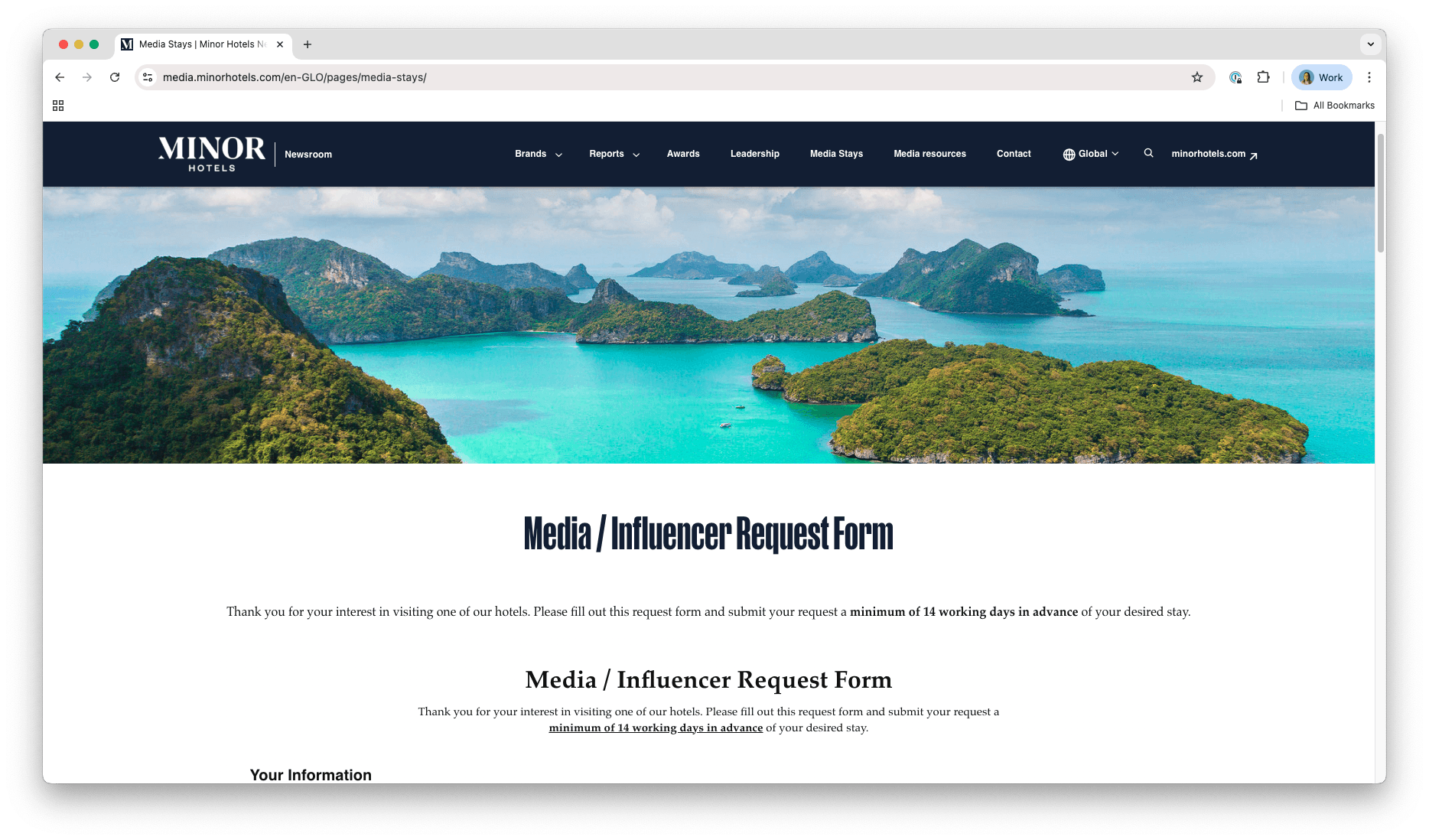
Minor Hotels recognizes that influencers are, in many ways, today’s journalists. Alongside traditional press releases and company bios, they offer a dedicated “Media Stays” section where creators can apply to experience their properties firsthand. By removing the usual back-and-forth emails, the brand makes collaboration as easy as possible, resulting in faster coverage and more authentic visibility for their hotels.
Wise
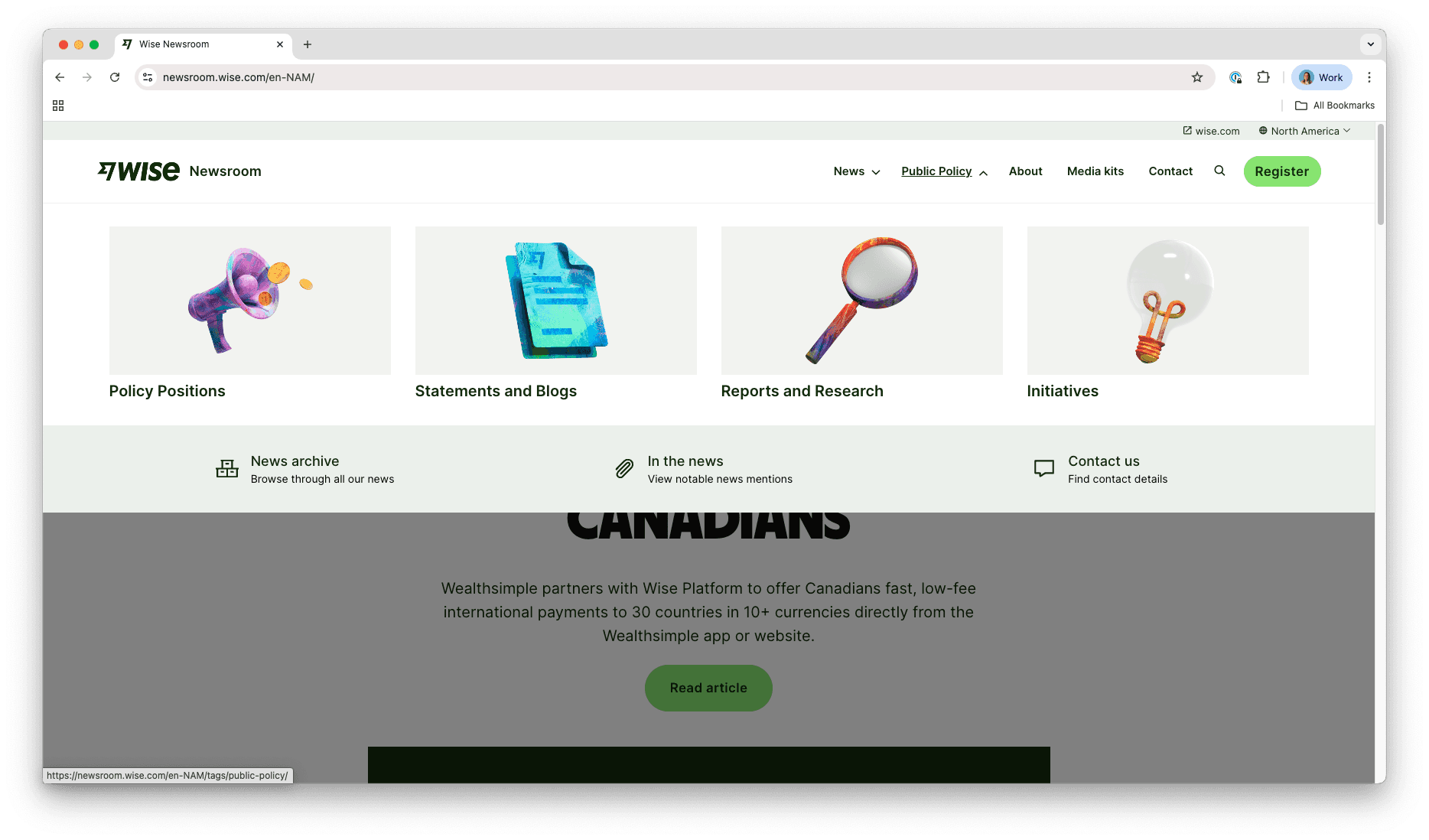
Wise treats its newsroom less like a bulletin board and more like a knowledge library. Beyond company announcements, it features a dedicated space for public policy, research, and in-depth reports tied to its industry initiatives. The result is a newsroom that explains not just what Wise does, but why, positioning the brand as a credible, authoritative voice in the fintech space.
Looking for more inspiration? Check out more examples of effective press centers here.
The truth signal in action
Imagine: a journalist covering your industry asks an AI assistant for background on your company. The AI assistant crawls your newsroom, finds structured data it can trust, pulls a verified statistic from your data vault and surfaces your SME as a potential interview source… all before the journalist decides to visit your site.
Or, a niche blogger researches a trend piece, finds your owned media newsroom through organic search, discovers you’ve been documenting the evolution of this exact trend for months, and positions you as the authority.
That’s the power of a strategic online newsroom. In 2026, digital PR is about being discoverable, trustworthy and useful to humans and the AI assistants increasingly doing their research. That’s where a strong online newsroom strategy can get you miles ahead of your competitors.
It can be hard work to keep a valuable, up-to-date online newsroom going (like Apple does), but getting lost in today’s AI noise isn’t an option.
If you’re ready to discover how PR.co can help you build a high-trust newsroom that journalists, stakeholders, search engines and AI algorithms can rely on, let’s chat.
FAQs
We’re rethinking our online newsroom strategy. How often should we update our newsroom to keep content fresh without overwhelming our team?
Aim for at least one update a week, even if it’s brief. Batch-create content during slower periods, schedule press releases in advance, and don’t underestimate the value of curating employee or customer stories.
A single team member who spends 2-3 hours per week on newsroom updates can maintain momentum. The goal is consistency, not perfection or volume.
Does our online newsroom really need to include raw data and unedited assets? Won’t that expose us to more scrutiny?
Yes and yes, because scrutiny is the point. In 2026, transparency builds trust. If your data can’t withstand scrutiny, that’s a business problem, not a PR problem.
Journalists fact-check everything, especially in investigative journalism. Giving journalists source material via your owned media platforms positions you as confident and cooperative. Plus, raw assets are harder for competitors to claim as AI-generated, which protects your authenticity.
Can we implement effective online newsroom strategies with basic tools?
Absolutely. While platforms like PR.co make implementation easier, you can start with what you have. For example, use Google Sheets for your data vault, create a simple “Experts” page with headshots and contact info, and write zero-click social snippets in a shared doc.
The strategy matters more than the tools. That said, as you prove ROI, investing in purpose-built newsroom software (yes, that’s what we offer) can dramatically reduce your manual workload.
TL;DR: In the AI-saturated internet of 2026, your online newsroom must evolve from a static archive into a “truth signal.” This article shares seven tactics to keep your brand discoverable and credible: GEO/AEO, verified data vaults, SME access, raw assets, zero-click content, always-on updates and niche distribution.
Key insights:
In 2026, brands will win by being a verified, structured, always-on source of truth.
Because hallucinated stats are everywhere, journalists and AI agents increasingly rely on downloadable primary-source data.
Over-produced corporate material can look AI-generated. In contrast, unedited footage, behind-the-scenes media, ambient audio and multi-format assets can help prove “this actually happened.”
A targeted niche outlet, such as Substack or a specialist blog, can outperform major news outlets.
Newsrooms with curated beat sections and tailored assets are the way forward.
Right now, the internet is a messy place. AI-generated content is everywhere, journalists drown in the noise, and your carefully crafted press releases compete with millions of generic articles that sound just credible enough to confuse everyone, including the LLMs.
For PR, communications and marketing pros who work with small brands and limited budgets, this presents a real challenge: How do you get attention in a world of distractions, especially when enterprise brands keep stealing the show?
The solution lies in shifting your online newsroom from an afterthought or neglected content archive into a living, breathing “truth signal”. In other words, a verified, structured, always-on source that humans and machines can trust.
But where to start? Right here, with these seven key tactics for building an online newsroom strategy that works in 2026.
1. Optimize for GEO and AEO
Remember when SEO was the golden ticket to audience attention? Well, meet its evolved cousins: GEO (Generative Engine Optimization) and AEO (Answer Engine Optimization). AI tools like ChatGPT, Claude and Google AI Overviews are now the gatekeepers between your brand and your target audience. If AI platforms and search engines can’t read your content, you don’t exist.
The fix?
Make your newsroom content machine-readable. Use schema, structure, clear H1/H2 styling hierarchies, strong digital asset management and “answer-first” formatting.
Write in Q&A style with clear, authoritative answers that provide key facts in the first sentence, rather than burying them several paragraphs in.
Lukas Keller, PR lead at Swiss e-commerce group Brack.Alltron, saw this shift firsthand during the company's leadership event at Google Zurich. There, Google previewed its upcoming AI-powered search experience and demonstrated how brand queries are now answered, not by scanning the open web broadly, but by pulling from a small set of trusted primary sources.
When Brack.Alltron’s name was entered into the AI search mode, the result made one thing clear: the company’s online newsroom was the primary source AI used to understand and describe the brand, alongside its Wikipedia entry and corporate website.
“Our online newsroom has become the top source AI relies on to understand our brand. That’s why structured, up-to-date newsroom content is no longer optional. It directly determines whether you’re visible in AI search,” Lukas explains.
Our article on “7 ways to structure a press release” unpacks this process in finer detail.

2. Build a vault of verified data
In the era of AI hallucinations (where AI models make up statistics that sound plausible), raw data is gold for journalists and AI agents alike.
But how do you make your data easily accessible? Via your online newsroom’s dedicated data vault. Include downloadable CSV files, interactive charts, year-on-year comparisons and “quick fact” infographics. When you make claims such as “30% growth,” provide the actual numbers. When you announce market leadership, show the methodology behind it.
Just as importantly, don’t rely solely on third-party sources or generic industry figures. Investing in your own data gathering. Even simple surveys, benchmarking studies or usage analytics give you something journalists and content creators actively seek out for their own publications and social feeds.
Building a vault of verified data is about becoming the definitive source on a topic, especially critical in investigative journalism. Journalists must fact-check and verify AI-generated drafts against primary sources. If your data is structured, downloadable and clearly attributed, you become that source. Plus, AI models can ingest, process and cite structured data far more reliably than prose.
More about this in our article on “how to get your brand cited by AI.”
3. Create a subject matter expert (SME) marketplace
Journalists are tired of quotes that could have been written by anyone (or anything). They want authentic insight from years of experience and genuine human intuition.
Your company’s subject-matter experts (SMEs) are your secret weapon in the war against generic AI content. Use them to transform your online newsroom into the go-to source for thought leaders.
Include features such as:
Real-time availability status of your SMEs.
Preferred contact methods and typical response times for media inquiries.
High-quality headshots and up-to-date bios.
Specific topics each expert can speak to (think “expert beats”).
Video and audio samples of past interviews.
Make it super easy for a reporter to book a 10-minute online chat or request a quote from someone who actually knows what they’re talking about. In 2026, access to real expertise is a major competitive advantage.
4. Prioritize raw, high-quality assets
In 2026, polished corporate content triggers skepticism. If it’s too perfect and processed, it’s likely to come across as AI-generated, even if it’s not.
In contrast, a content library of unedited, high-definition B-roll brand footage within your online newsroom builds authenticity. Include behind-the-scenes footage, wide shots, ambient audio, clips from speeches and all the unprofessional, human-captured content that proves your product launch or big event actually happened.
Doing this, along with providing assets in multiple formats, gives journalists easy building blocks for their stories. And easy almost always means better coverage.
5. Shift to zero-click content
Harsh truth: very few readers click through to your full website. Most readers, and certainly journalists working on tight deadlines, consume information where they find it (e.g., in their inboxes or on social feeds).
So, how do you meet your target audience where they’re at, especially at a time when they’re distracted, overwhelmed and reliant on AI assistants to pre-digest information?
Start with two small actions that can have a big impact:
Write headlines that tell the full story. For example: “Acme Corp achieves carbon neutrality across all 47 facilities, three years ahead of schedule” beats “Acme Corp announces sustainability milestone.” If an AI model had to summarize your press release in one sentence without reading past the headline, would it get it right? That’s your goal.
Include social-ready snippets. These are pre-written pieces of content that can be copied directly into newsletters, LinkedIn posts or other channels, while keeping your brand language and core messaging intact.
6. Maintain an always-on pulse feed
If you put all your effort into big announcements, your newsroom looks like a ghost town 90% of the time (and like a firehose the other 10%).
Instead, maintain a chronological “pulse feed” of short news snippets, e.g., updates on new hires, product iterations, cultural milestones, community wins and customer stories. Not every update needs a full press release. A few short paragraphs with a photo work just fine.
This consistent drumbeat of activity accomplishes three things:
It keeps your newsroom fresh, increasing the likelihood that your site is revisited more often by search crawlers and AI discovery bots.
It gives journalists material for feature stories, not just news hits.
It builds long-term brand journalism credibility. You’re not just shouting for coverage. You’re documenting your journey.
The beauty of brand journalism is that it works even when mainstream media ignores you. Your owned media channels serve as a record of your brand’s evolution, searchable and citable by anyone researching your company or industry.
7. Focus on niche-first distribution
The era of mass-blasting generic press releases to 10,000 contacts is over. In 2026, influence doesn’t come from one big megaphone, but from many smaller, trusted voices.
A Substack newsletter with 5,000 hyper-engaged fintech executives might be worth more than a brief mention in a general business publication with 500,000 passive readers.
Use your newsroom to cater to independent and niche publishers:
Create dedicated, curated sections that aggregate all your relevant content for specific beats (for example, regulatory compliance or supply chain sustainability).
Offer exclusive previews to data drops or availability to speak with company SMEs.
This approach is about precision rather than volume, and it means actually knowing who covers your space and what they care about. But for overworked PR teams, it’s also more efficient. A few meaningful conversations are always better than 100s of ignored emails.
Examples of effective online newsrooms
Velotric
Velotric’s newsroom is built around the principle of consistency. It uses the same navigation and visual language as the brand’s online store, so visitors never feel like they’ve left the Velotric universe. This seamless experience reinforces trust and credibility, proving that every brand touchpoint (newsroom included) plays a role in shaping perception.

Polaroid
Polaroid proves that simplicity still wins. Their newsroom organizes press assets into clearly structured folders by product, eliminating the need to hunt for the right image. For journalists working against tight deadlines, this frictionless access is so important. They can simply grab a high-resolution photo, download, and continue writing their story.

Canyon
Canyon takes media accessibility one step further by grouping press kits by product category, such as mountain or gravel bikes. Their brand assets such as logos are kept front and center, making the newsroom feel like a true self-service hub. Everything a journalist (or any other stakeholder) needs to tell a compelling story is pre-packaged and ready to use.

Lynk & Co
Lynk & Co’s newsroom stands out for its strong focus on localized communication. Instead of relying on a single global news feed, they publish market-specific news in multiple languages, ensuring journalists and stakeholders get content that’s truly relevant to their region. Beyond improving the human experience, this translated content also boosts AI visibility, making it easier for search engines and AI assistants to surface Lynk & Co’s stories in local queries and summaries.
Here's why translation matters more than ever in the age of AI.

Twotone
As an agency deeply embedded in the cycling world, Twotone has built a newsroom that reflects its ecosystem approach. Content is organized using tags, allowing each brand’s news to live independently while remaining connected. A journalist searching for one bike story may easily discover several others, turning the newsroom into a central hub that encourages exploration and cross-pollination.

Minor Hotels
Minor Hotels recognizes that influencers are, in many ways, today’s journalists. Alongside traditional press releases and company bios, they offer a dedicated “Media Stays” section where creators can apply to experience their properties firsthand. By removing the usual back-and-forth emails, the brand makes collaboration as easy as possible, resulting in faster coverage and more authentic visibility for their hotels.

Wise
Wise treats its newsroom less like a bulletin board and more like a knowledge library. Beyond company announcements, it features a dedicated space for public policy, research, and in-depth reports tied to its industry initiatives. The result is a newsroom that explains not just what Wise does, but why, positioning the brand as a credible, authoritative voice in the fintech space.

Looking for more inspiration? Check out more examples of effective press centers here.
The truth signal in action
Imagine: a journalist covering your industry asks an AI assistant for background on your company. The AI assistant crawls your newsroom, finds structured data it can trust, pulls a verified statistic from your data vault and surfaces your SME as a potential interview source… all before the journalist decides to visit your site.
Or, a niche blogger researches a trend piece, finds your owned media newsroom through organic search, discovers you’ve been documenting the evolution of this exact trend for months, and positions you as the authority.
That’s the power of a strategic online newsroom. In 2026, digital PR is about being discoverable, trustworthy and useful to humans and the AI assistants increasingly doing their research. That’s where a strong online newsroom strategy can get you miles ahead of your competitors.
It can be hard work to keep a valuable, up-to-date online newsroom going (like Apple does), but getting lost in today’s AI noise isn’t an option.
If you’re ready to discover how PR.co can help you build a high-trust newsroom that journalists, stakeholders, search engines and AI algorithms can rely on, let’s chat.
FAQs
We’re rethinking our online newsroom strategy. How often should we update our newsroom to keep content fresh without overwhelming our team?
Aim for at least one update a week, even if it’s brief. Batch-create content during slower periods, schedule press releases in advance, and don’t underestimate the value of curating employee or customer stories.
A single team member who spends 2-3 hours per week on newsroom updates can maintain momentum. The goal is consistency, not perfection or volume.
Does our online newsroom really need to include raw data and unedited assets? Won’t that expose us to more scrutiny?
Yes and yes, because scrutiny is the point. In 2026, transparency builds trust. If your data can’t withstand scrutiny, that’s a business problem, not a PR problem.
Journalists fact-check everything, especially in investigative journalism. Giving journalists source material via your owned media platforms positions you as confident and cooperative. Plus, raw assets are harder for competitors to claim as AI-generated, which protects your authenticity.
Can we implement effective online newsroom strategies with basic tools?
Absolutely. While platforms like PR.co make implementation easier, you can start with what you have. For example, use Google Sheets for your data vault, create a simple “Experts” page with headshots and contact info, and write zero-click social snippets in a shared doc.
The strategy matters more than the tools. That said, as you prove ROI, investing in purpose-built newsroom software (yes, that’s what we offer) can dramatically reduce your manual workload.
Stay ahead in PR & comms
Get expert insights on PR, communications, and AI delivered to your inbox.
On this page
Gepubliceerd
23 jan 2026
Bijgewerkt op
23 jan 2026
Geschreven door
Beoordeeld door
Genoten van het artikel?
Ontvang de beste nieuwsbrief voor Nederlandse pr-professionals
Get expert insights on PR, communications, and AI delivered to your inbox.
15-min demo

Ontdek PR.co
Learn how modern PR teams drive their PR strategy with PR.co. No fluff — just a quick, insightful product demo to see if it’s right for you.

4.7

Ontdek PR.co
Learn how modern PR teams drive their PR strategy with PR.co. No fluff — just a quick, insightful product demo to see if it’s right for you.

4.7
15-min demo

Ontdek PR.co
Learn how modern PR teams drive their PR strategy with PR.co. No fluff — just a quick, insightful product demo to see if it’s right for you.