Wat de McDonald’s CEO-crisis PR-professionals leert over authenticiteit
Wat de McDonald’s CEO-crisis PR-professionals leert over authenticiteit

TL;DR: When McDonald’s CEO posted an Instagram video promoting the Big Arch burger, he didn’t expect the clip to go viral. A hesitant nibble, corporate language and a sterile backdrop quickly turned it into a meme. Here’s what the McDonald’s PR crisis teaches PR teams about media training and why authenticity can’t be faked on camera.
Key takeaways:
Small behavioral cues (a hesitant bite, corporate wording, a sterile backdrop) can trigger serious brand backlash on social media.
When an executive’s words don’t match their body language, audiences notice. They’re quick to share it, too.
While the “McNibble” incident generated followers, engagement and even sales, it quite likely hurt brand trust.
When scripting, filming and approvals are spread across teams and platforms, no one owns the overall impression. Good collaboration software and a single decision-maker are part of the solution.
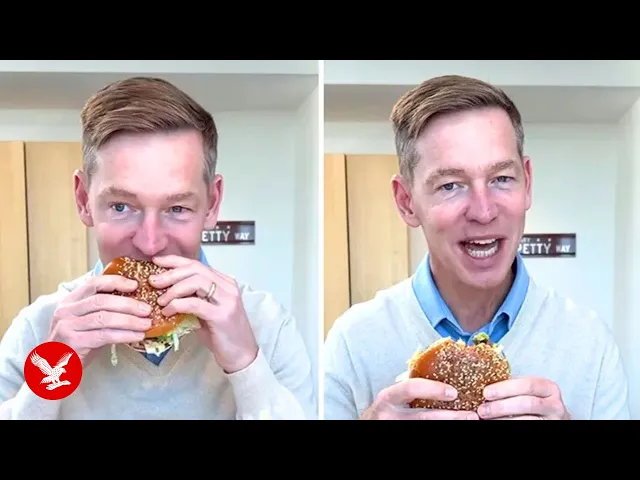
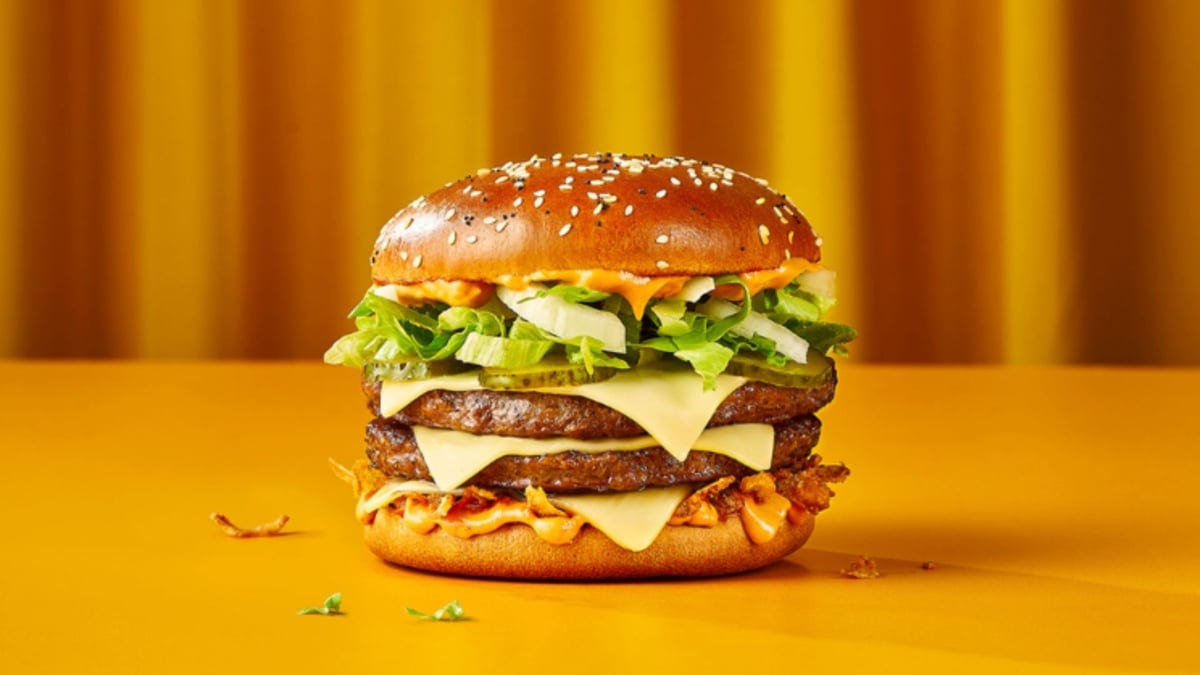
In February 2026, McDonald’s CEO Chris Kempczinski shared an 80-second Instagram video to promote the Big Arch burger ahead of its U.S. launch. The clip sat largely unnoticed for weeks, until content creators picked it up and turned it into what the internet quickly dubbed the “McNibble.”
Comments spread across LinkedIn, Instagram and X. Some focused on his word choice: “You referred to the burger as a ‘product’ instead of simply a ‘deluxe sandwich.’ That’s crazy.”
Others mocked his delivery: “Somebody said he was eating that burger like he was a contestant on Fear Factor.”
Reddit users also weighed in with blunt advice: “If McDonald’s cares about its future, they need to make sure [Kempczinski is] anywhere but in front of a camera.”
Yet in April 2026, Kempczinski was back in the spotlight. A WSJ Instagram post in which he took another small bite, this time out of a chicken nugget, once again sparked controversy.
This article examines how a single mismanaged social post can escalate into a social media PR crisis, and what other brands can do to build authenticity and ultimately prevent a similar scenario.
Why did the McDonald’s PR crisis escalate so quickly?
The first Big Arch Instagram video offered three clear triggers for negative public reaction:
The language. Kempczinski didn’t say he was eating a burger. He didn’t even call the burger the new “Big Arch.” He said he was there to promote a “product.” This immediately told audiences the clip was a clinical, corporate exercise.
The bite. After he built up the burger’s size and quality, Kempczinski took a small, hesitant nibble. The gap between the burger’s promise and the action was obvious.
The setting. The video was shot in a bright, sterile office with beige walls and fluorescent lights. A CEO who feels excited about a burger would film in a setting that fits the moment, like a McDonald’s branch or kitchen. The backdrop said “staged” before he’d even said a word.
How did competitors turn the McDonald’s PR fail into a marketing win?
Once the video went viral, McDonald’s competitors seized the moment and moved fast.
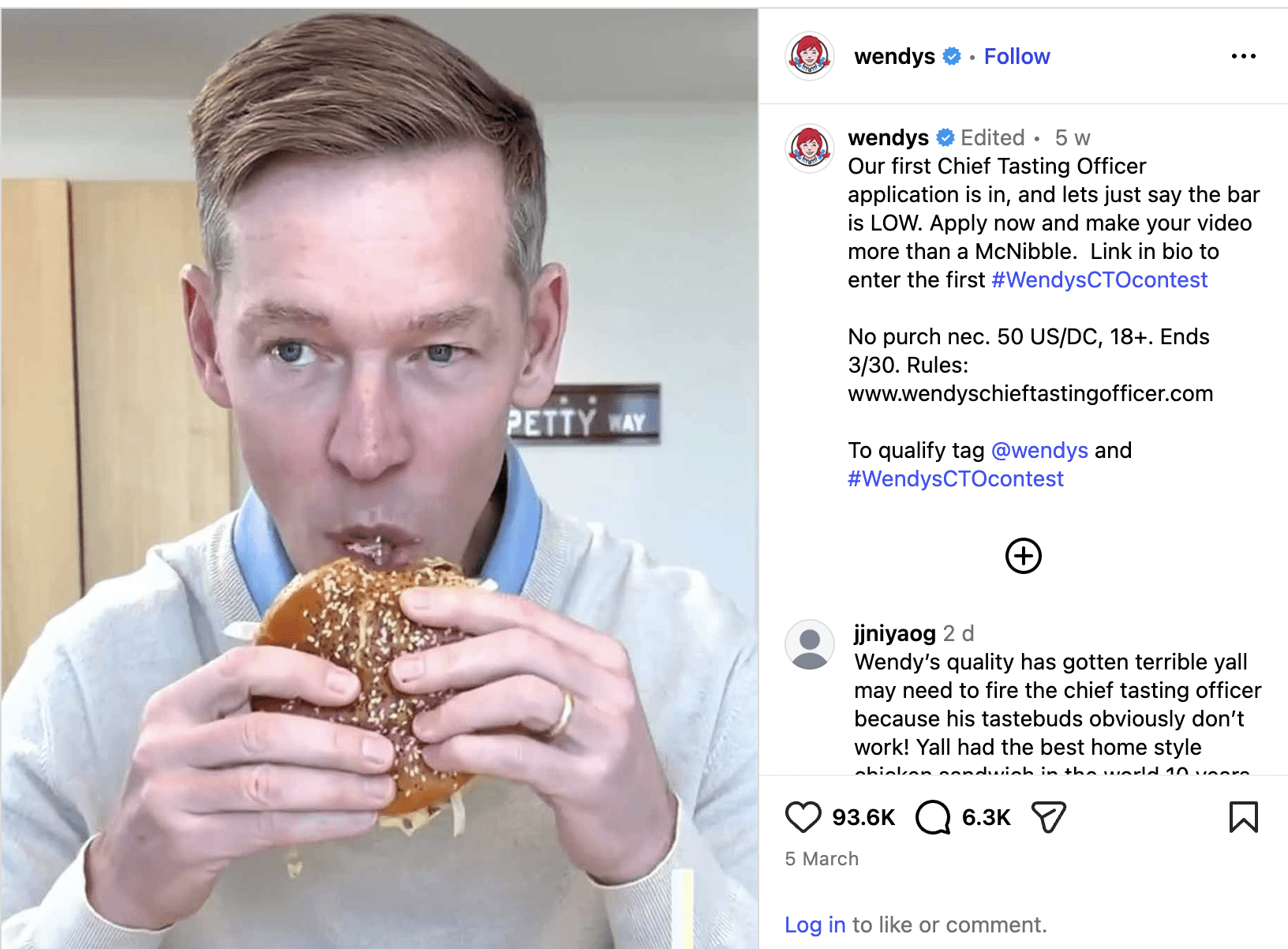
Wendy’s posted an image of Kempczinski biting into the burger as part of a ”Chief Tasting Officer” recruitment campaign, with the caption that the bar was low.
It’s U.S. President Pete Suerken also filmed a video, eating a Baconator. “This is what it looks like when you don’t have to pretend to like your product,” he quipped.
Burger King joined in with its own CEO-style video that felt looser and more self-aware. The caption was simple: “Thought we’d replay this.” Kate Finley, founder at Belle Communications, noted that this video wasn’t even new. It was repurposed from a previous campaign. “Burger King didn’t outspend McDonald’s here, they out-read the room," says Kate. "That’s the difference between a brand that creates content and a brand that knows how to move.”
What set these responses apart came down to timing, tone and authenticity. While Kempczinski’s video felt overly prepared and sterile, the competitor content felt immediate and genuine, like real people reacting in the moment.
The McDonald’s PR crisis exposed a gap in its corporate communications strategy
As communications expert Oliver Aust points out on LinkedIn, the issue isn’t just what made it into the Big Arch CEO video, but what didn’t get challenged before it went live.
“CEOs are busy, and they have to trust their communications experts. A CEO video like this involves many people, but apparently no one had the guts to say: ‘Sorry boss, let’s not do it this way.’”
This kind of breakdown often happens in large, distributed PR teams. When the script, the production, the approval and the final post are handled by different people, no one owns the full picture. That’s how small but critical details like the hesitant bite or the word “product” may slip through.
PR teams also tend to focus on whether the message is correct, but spend less time evaluating how it actually looks, sounds and feels on the platform. What was missing here was a simple fresh perspective, i.e., someone willing to step back and ask: “How does this play on Instagram?”
When no single person sees the full picture, it creates risk. One solution is to use crisis communication software like PR.co, which keeps all content, comments, approvals and more together in one centralized, transparent hub.
The “McNibble” numbers (and why they don’t settle the “failure” argument)
As a result of the McNibbles video, Kempczinski’s personal Instagram following grew by 30%, and the video generated over 157,000 likes.
Beyond social metrics, MarketWatch also estimated that the McNibble video created at least US$18 million in free publicity and boosted Big Arch burger sales above expectations.
On paper, then, it hardly looks like a failure.
Kempczinski himself also took the blow-up in his stride. “I think when you go on to social media in general, you have to have a thick skin,” he told the WSJ.
Whether the McDonalds PR fail qualifies as a true disaster depends largely on who you ask. But what the incident clearly underscores is the importance of authenticity and good media training.
What kind of media training and corporate communications strategy can prevent a similar blow-up?
When an executive accustomed to press conferences and investor calls addresses a broad social media audience without adapting their language, tone or delivery, the message can easily land in unintended ways.
Laura Podesta, former CBS News correspondent and BBC contributor turned public speaking coach, explains that executive visibility on social media needs to be treated with the same rigor as any high-stakes media moment:
"I’m all for more CEOs using video to promote their brand. It's becoming more and more common for brand leaders to show up on the company social feed, but these appearances should be treated like any other media opportunity because they have the same (if not more!) reach. And can come with criticism, as we saw in this case."
CEO media training should cover using conversational language rather than corporate phrasing, and keeping messages short and clear. It should also help executives speak naturally on camera, avoid overly scripted delivery, and ensure their body language matches what they’re saying.
Laura suggests "every on-camera opportunity must be approached from the viewer's perspective. In this case, the customer's perspective. It's imperative that the exec asks themselves as they're putting together a script or preparing to ad-lib: one, who am I speaking to, and two, what do I want them to understand?"
"In this case, the CEO's goal should have been simple: make the customers crave the new burger! Instead, by not finishing the burger right then and there, it came across as, not very craveable," says Laura. "He's now blaming his Mom for teaching him to not speak with his mouth full. If that was the case, well, explain at the top of the video how excited you are about the new tasty ingredients in this burger, then have the cameraperson continue rolling as you dive in. There are dozens of creative ways to make a message land, it's just important to be clear on that message from the start."
While McDonald’s appears to have escaped relatively unscathed, that isn’t always how these situations play out.
Here’s what to fix in your corporate communications strategy before one of your executives find themselves in the middle of a PR disaster:
Audit the language. If it sounds like something someone will only say in a boardroom, rewrite it. “Product” had no place in the Big Arch video.
Match the setting to the story. Film where the product belongs. A sterile office tells your audience everything they need to know about how staged the moment is.
Rehearse the full moment. Media and spokesperson training too often focuses only on key messages and Q&A prep. However, audiences will scrutinize everything, from the bite to the micro-expression on the executive’s face.
Align words with behavior. If something is “amazing” or “delicious,” it needs to look that way on camera, too.
Build speed into your real-time crisis response process. Decide in advance what can go out quickly and who signs off on the messages. A crisis communications playbook can define what can go out quickly, who signs off on messages and how teams should respond when an executive post starts attracting unexpected attention. Brand reputation management begins long before a crisis hits.
Prepare for the platform, not just the message. Each media channel has its own rhythm. What works in a press environment or on LinkedIn won’t always translate to Instagram, Facebook or TikTok.
Successful communications teams also ask tough pre-publish questions to avoid PR crisis management scenarios. These questions may include:
Would a regular customer say this, or does it sound scripted?
What’s the most unflattering interpretation of this clip?
Do the executive’s facial expressions and body language match the message?
Would this still feel authentic without sound?
Is there anything meme-able in this clip?
Does the setting reinforce or undermine the message?
There’s also usually a clearly designated owner who has the authority to say, “Let’s reshoot that.”
Want to see how PR.co can help you manage media relations, crisis situations and much more? Book a demo with Nelson.
FAQs
1. Why did the word “product” matter so much in the recent McDonald’s PR crisis?
Language signals intent. When Kempczinski called the burger a “product,” audiences heard a corporate memo, not a person who actually wanted to eat it. One word created the distance that everything else followed from.
2. What does good executive media training look like before someone goes on camera?
Rehearse the full moment, not just the key messages. The language, setting and bite are all visible on social media. If the words say “amazing” and the body language says otherwise, audiences will notice.
3. Does a viral moment mean a PR moment was a success?
Not always. The McNibble moment reached a large audience, gained followers, earned likes and even boosted burger sales. But going viral mainly shows that people were curious or entertained. It doesn’t show whether they trusted the brand or felt more confident in it. Curiosity and confidence are not the same.
TL;DR: When McDonald’s CEO posted an Instagram video promoting the Big Arch burger, he didn’t expect the clip to go viral. A hesitant nibble, corporate language and a sterile backdrop quickly turned it into a meme. Here’s what the McDonald’s PR crisis teaches PR teams about media training and why authenticity can’t be faked on camera.
Key takeaways:
Small behavioral cues (a hesitant bite, corporate wording, a sterile backdrop) can trigger serious brand backlash on social media.
When an executive’s words don’t match their body language, audiences notice. They’re quick to share it, too.
While the “McNibble” incident generated followers, engagement and even sales, it quite likely hurt brand trust.
When scripting, filming and approvals are spread across teams and platforms, no one owns the overall impression. Good collaboration software and a single decision-maker are part of the solution.
In February 2026, McDonald’s CEO Chris Kempczinski shared an 80-second Instagram video to promote the Big Arch burger ahead of its U.S. launch. The clip sat largely unnoticed for weeks, until content creators picked it up and turned it into what the internet quickly dubbed the “McNibble.”
Comments spread across LinkedIn, Instagram and X. Some focused on his word choice: “You referred to the burger as a ‘product’ instead of simply a ‘deluxe sandwich.’ That’s crazy.”
Others mocked his delivery: “Somebody said he was eating that burger like he was a contestant on Fear Factor.”
Reddit users also weighed in with blunt advice: “If McDonald’s cares about its future, they need to make sure [Kempczinski is] anywhere but in front of a camera.”
Yet in April 2026, Kempczinski was back in the spotlight. A WSJ Instagram post in which he took another small bite, this time out of a chicken nugget, once again sparked controversy.
This article examines how a single mismanaged social post can escalate into a social media PR crisis, and what other brands can do to build authenticity and ultimately prevent a similar scenario.
Why did the McDonald’s PR crisis escalate so quickly?
The first Big Arch Instagram video offered three clear triggers for negative public reaction:
The language. Kempczinski didn’t say he was eating a burger. He didn’t even call the burger the new “Big Arch.” He said he was there to promote a “product.” This immediately told audiences the clip was a clinical, corporate exercise.
The bite. After he built up the burger’s size and quality, Kempczinski took a small, hesitant nibble. The gap between the burger’s promise and the action was obvious.
The setting. The video was shot in a bright, sterile office with beige walls and fluorescent lights. A CEO who feels excited about a burger would film in a setting that fits the moment, like a McDonald’s branch or kitchen. The backdrop said “staged” before he’d even said a word.
How did competitors turn the McDonald’s PR fail into a marketing win?
Once the video went viral, McDonald’s competitors seized the moment and moved fast.
Wendy’s posted an image of Kempczinski biting into the burger as part of a ”Chief Tasting Officer” recruitment campaign, with the caption that the bar was low.
It’s U.S. President Pete Suerken also filmed a video, eating a Baconator. “This is what it looks like when you don’t have to pretend to like your product,” he quipped.
Burger King joined in with its own CEO-style video that felt looser and more self-aware. The caption was simple: “Thought we’d replay this.” Kate Finley, founder at Belle Communications, noted that this video wasn’t even new. It was repurposed from a previous campaign. “Burger King didn’t outspend McDonald’s here, they out-read the room," says Kate. "That’s the difference between a brand that creates content and a brand that knows how to move.”
What set these responses apart came down to timing, tone and authenticity. While Kempczinski’s video felt overly prepared and sterile, the competitor content felt immediate and genuine, like real people reacting in the moment.
The McDonald’s PR crisis exposed a gap in its corporate communications strategy
As communications expert Oliver Aust points out on LinkedIn, the issue isn’t just what made it into the Big Arch CEO video, but what didn’t get challenged before it went live.
“CEOs are busy, and they have to trust their communications experts. A CEO video like this involves many people, but apparently no one had the guts to say: ‘Sorry boss, let’s not do it this way.’”
This kind of breakdown often happens in large, distributed PR teams. When the script, the production, the approval and the final post are handled by different people, no one owns the full picture. That’s how small but critical details like the hesitant bite or the word “product” may slip through.
PR teams also tend to focus on whether the message is correct, but spend less time evaluating how it actually looks, sounds and feels on the platform. What was missing here was a simple fresh perspective, i.e., someone willing to step back and ask: “How does this play on Instagram?”
When no single person sees the full picture, it creates risk. One solution is to use crisis communication software like PR.co, which keeps all content, comments, approvals and more together in one centralized, transparent hub.
The “McNibble” numbers (and why they don’t settle the “failure” argument)
As a result of the McNibbles video, Kempczinski’s personal Instagram following grew by 30%, and the video generated over 157,000 likes.
Beyond social metrics, MarketWatch also estimated that the McNibble video created at least US$18 million in free publicity and boosted Big Arch burger sales above expectations.
On paper, then, it hardly looks like a failure.
Kempczinski himself also took the blow-up in his stride. “I think when you go on to social media in general, you have to have a thick skin,” he told the WSJ.
Whether the McDonalds PR fail qualifies as a true disaster depends largely on who you ask. But what the incident clearly underscores is the importance of authenticity and good media training.
What kind of media training and corporate communications strategy can prevent a similar blow-up?
When an executive accustomed to press conferences and investor calls addresses a broad social media audience without adapting their language, tone or delivery, the message can easily land in unintended ways.
Laura Podesta, former CBS News correspondent and BBC contributor turned public speaking coach, explains that executive visibility on social media needs to be treated with the same rigor as any high-stakes media moment:
"I’m all for more CEOs using video to promote their brand. It's becoming more and more common for brand leaders to show up on the company social feed, but these appearances should be treated like any other media opportunity because they have the same (if not more!) reach. And can come with criticism, as we saw in this case."
CEO media training should cover using conversational language rather than corporate phrasing, and keeping messages short and clear. It should also help executives speak naturally on camera, avoid overly scripted delivery, and ensure their body language matches what they’re saying.
Laura suggests "every on-camera opportunity must be approached from the viewer's perspective. In this case, the customer's perspective. It's imperative that the exec asks themselves as they're putting together a script or preparing to ad-lib: one, who am I speaking to, and two, what do I want them to understand?"
"In this case, the CEO's goal should have been simple: make the customers crave the new burger! Instead, by not finishing the burger right then and there, it came across as, not very craveable," says Laura. "He's now blaming his Mom for teaching him to not speak with his mouth full. If that was the case, well, explain at the top of the video how excited you are about the new tasty ingredients in this burger, then have the cameraperson continue rolling as you dive in. There are dozens of creative ways to make a message land, it's just important to be clear on that message from the start."
While McDonald’s appears to have escaped relatively unscathed, that isn’t always how these situations play out.
Here’s what to fix in your corporate communications strategy before one of your executives find themselves in the middle of a PR disaster:
Audit the language. If it sounds like something someone will only say in a boardroom, rewrite it. “Product” had no place in the Big Arch video.
Match the setting to the story. Film where the product belongs. A sterile office tells your audience everything they need to know about how staged the moment is.
Rehearse the full moment. Media and spokesperson training too often focuses only on key messages and Q&A prep. However, audiences will scrutinize everything, from the bite to the micro-expression on the executive’s face.
Align words with behavior. If something is “amazing” or “delicious,” it needs to look that way on camera, too.
Build speed into your real-time crisis response process. Decide in advance what can go out quickly and who signs off on the messages. A crisis communications playbook can define what can go out quickly, who signs off on messages and how teams should respond when an executive post starts attracting unexpected attention. Brand reputation management begins long before a crisis hits.
Prepare for the platform, not just the message. Each media channel has its own rhythm. What works in a press environment or on LinkedIn won’t always translate to Instagram, Facebook or TikTok.
Successful communications teams also ask tough pre-publish questions to avoid PR crisis management scenarios. These questions may include:
Would a regular customer say this, or does it sound scripted?
What’s the most unflattering interpretation of this clip?
Do the executive’s facial expressions and body language match the message?
Would this still feel authentic without sound?
Is there anything meme-able in this clip?
Does the setting reinforce or undermine the message?
There’s also usually a clearly designated owner who has the authority to say, “Let’s reshoot that.”
Want to see how PR.co can help you manage media relations, crisis situations and much more? Book a demo with Nelson.
FAQs
1. Why did the word “product” matter so much in the recent McDonald’s PR crisis?
Language signals intent. When Kempczinski called the burger a “product,” audiences heard a corporate memo, not a person who actually wanted to eat it. One word created the distance that everything else followed from.
2. What does good executive media training look like before someone goes on camera?
Rehearse the full moment, not just the key messages. The language, setting and bite are all visible on social media. If the words say “amazing” and the body language says otherwise, audiences will notice.
3. Does a viral moment mean a PR moment was a success?
Not always. The McNibble moment reached a large audience, gained followers, earned likes and even boosted burger sales. But going viral mainly shows that people were curious or entertained. It doesn’t show whether they trusted the brand or felt more confident in it. Curiosity and confidence are not the same.
Blijf vooroplopen in PR & comms
Ontvang expertinzichten over PR, communicatie en AI in je inbox.
On this page
Gepubliceerd
Bijgewerkt op
Geschreven door
Beoordeeld door
Genoten van het artikel?
Ontvang de beste nieuwsbrief voor Nederlandse pr-professionals
Ontvang expertinzichten over PR, communicatie en AI in je inbox.
15-min demo

Ontdek PR.co
Ontdek hoe grote PR-teams complexe workflows oplossen met PR.co. Geen fluff — gewoon een kort, inzichtelijk gesprek om te zien hoe we kunnen helpen.

4.7
Ontdek PR.co
Ontdek hoe grote PR-teams complexe workflows oplossen met PR.co. Geen fluff — gewoon een kort, inzichtelijk gesprek om te zien hoe we kunnen helpen.
4.7
15-min demo
Ontdek PR.co
Ontdek hoe grote PR-teams complexe workflows oplossen met PR.co. Geen fluff — gewoon een kort, inzichtelijk gesprek om te zien hoe we kunnen helpen.