Wat is een corporate newsroom? Een gids voor comms-teams die er een bouwen
Ontdek hoe communications- en PR-teams corporate newsrooms gebruiken om content te centraliseren, publishing te besturen en consistent te blijven over merken en markten.


Last updated on

TL;DR: A corporate newsroom stops company news from living in six folders, three inboxes and one agency deck nobody can find. It gives corporate communications teams clear ownership, a single source of truth and a shared editorial rhythm. This guide covers the roles and governance behind these newsrooms, real-world examples and the software platforms that make them work.
Key insights:
A corporate newsroom is an editorial function, not simply the news section of a corporate website.
It gives editorial teams one source of truth, clear ownership and a shared content calendar.
A press office handles media relations, while a corporate newsroom coordinates the wider flow of company stories.
Strong newsroom structures balance central governance with room for local teams to adapt content.
Newsroom software supports the model, but it can never replace good editorial judgment or ownership.
At 8:17 on launch morning, the PR director is already playing detective. The approved press release is somewhere in a drive she can’t find. The CEO announcement lives in the CMS. Regional teams have their own translations, and the creative agency has the latest boilerplate (or at least everyone hopes it does).
Then the questions start. Which version is final? Has legal cleared the Spanish translation? Is the new headshot in the media kit? Can local teams publish, or are they still waiting on HQ?
Together, these questions reveal a very common operating problem. As companies add markets, stakeholders and approval layers, routine communications can turn into painfully slow scavenger hunts.
A corporate newsroom model replaces this chase with clear ownership, one source of truth and a shared editorial rhythm. It also gives corporate communications teams the structure to move quickly across markets and stay in control.
This guide explains what this operating model entails, why companies build online newsrooms, what the best corporate newsrooms get right and why international PR teams need the right software to run them at scale.
What is a corporate newsroom?
A corporate newsroom is the operating model companies use to plan, create, govern and publish stories like a media outlet, through one coordinated editorial function. It brings people, workflows, your content strategy and channels together around clear ownership, shared standards and a consistent publishing rhythm.
The terminology can get blurry because “corporate newsroom” is often used to refer to both the editorial operation and the website where its content appears.
Here’s the distinction:
The corporate newsroom refers to the broader editorial structure and way of working.
An online newsroom, press room or media center is the public hub where company news stories and media resources are published.
A press office handles media inquiries, journalist relationships, statements and reactive responses.
One communications team may manage all three, but a “News” tab alone doesn’t create a newsroom. Behind the newsroom, a comms team sets priorities, assigns owners, coordinates stories across editorial teams and markets, and governs what gets approved and published.
5 reasons companies build corporate newsrooms
Companies tend to formalize their corporate newsroom infrastructure when their communications outgrow the informal processes that once kept everything moving. By then, publishing volume has increased, and responsibility is spread across teams and markets.
A corporate newsroom operating model addresses that complexity in five ways:
1. It creates one source of truth
Company facts, press releases, media kits, spokesperson details and brand assets need a centralized home.
Without one, old logos remain in circulation, journalists quote retired executives, and regional teams copy statistics from outdated presentations.
A well-maintained digital newsroom gives everyone somewhere reliable to check information before publishing.
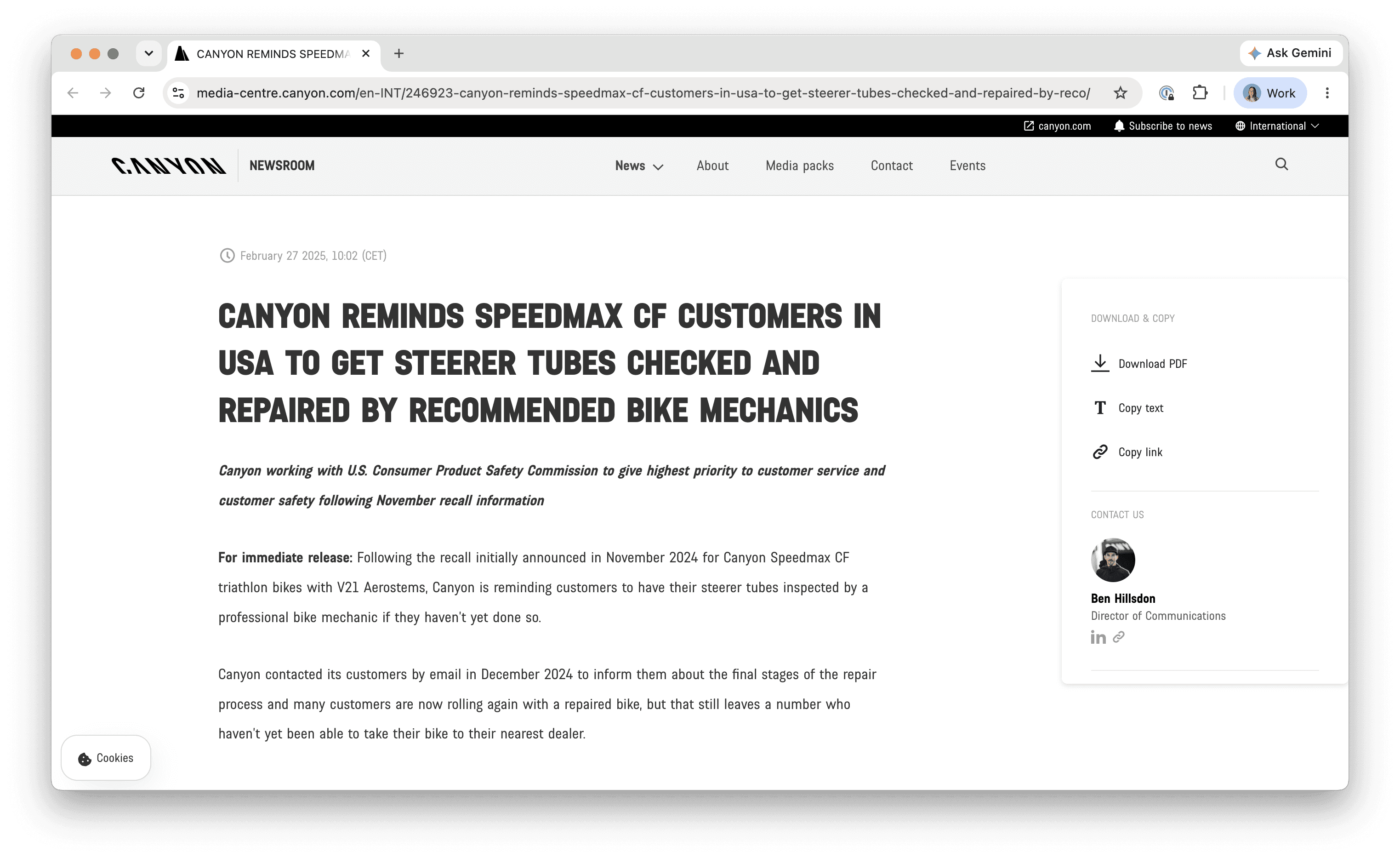
▲ When Canyon identified a safety issue affecting its Speedmax CF bikes in the US, it used its online newsroom to quickly publish recall information, explain the issue, and direct customers to the repair process. By making critical updates easy to find, Canyon ensured riders, media, and partners all had access to the same trusted information.
2. It makes your brand easier to find and cite
A strong corporate newsroom provides search engines and AI tools with an authoritative source of company facts, announcements and expertise. Clear structure, consistent naming, useful metadata and links between related stories make that information easier for machines to understand (and for people to find).
Regular publishing also builds a strong body of evidence around the subjects the company wants to be known for. Thought leadership content can support traditional SEO and increase the likelihood that the brand will be referenced in AI-generated answers.

▲ The Social Hub uses its newsroom to publish company news, research, and thought leadership directly from the source, helping shape how its brand is presented online. By keeping authoritative, well-structured content in one place, its newsroom also becomes a trusted source that AI search tools can reference when answering questions about the company.
See these “10 ways to get your brand cited by AI” for practical steps that support brand visibility in 2026.
3. It gives you more control of the public narrative
Control doesn’t mean the Head of Communications dictates every headline. It means making the company’s position, key messages and official materials consistent and easy to find.
This is particularly important during major announcements, leadership changes and crises, when incomplete information can outrun a formal response. On ordinary days, credible corporate content lets the company explain what it does and why it matters.
An owned newsroom gives the company a way to communicate directly with its audience and provides all stakeholders with an official point of reference. They can access the facts, context and supporting materials at the source, rather than relying on partial accounts or information passed through intermediaries.
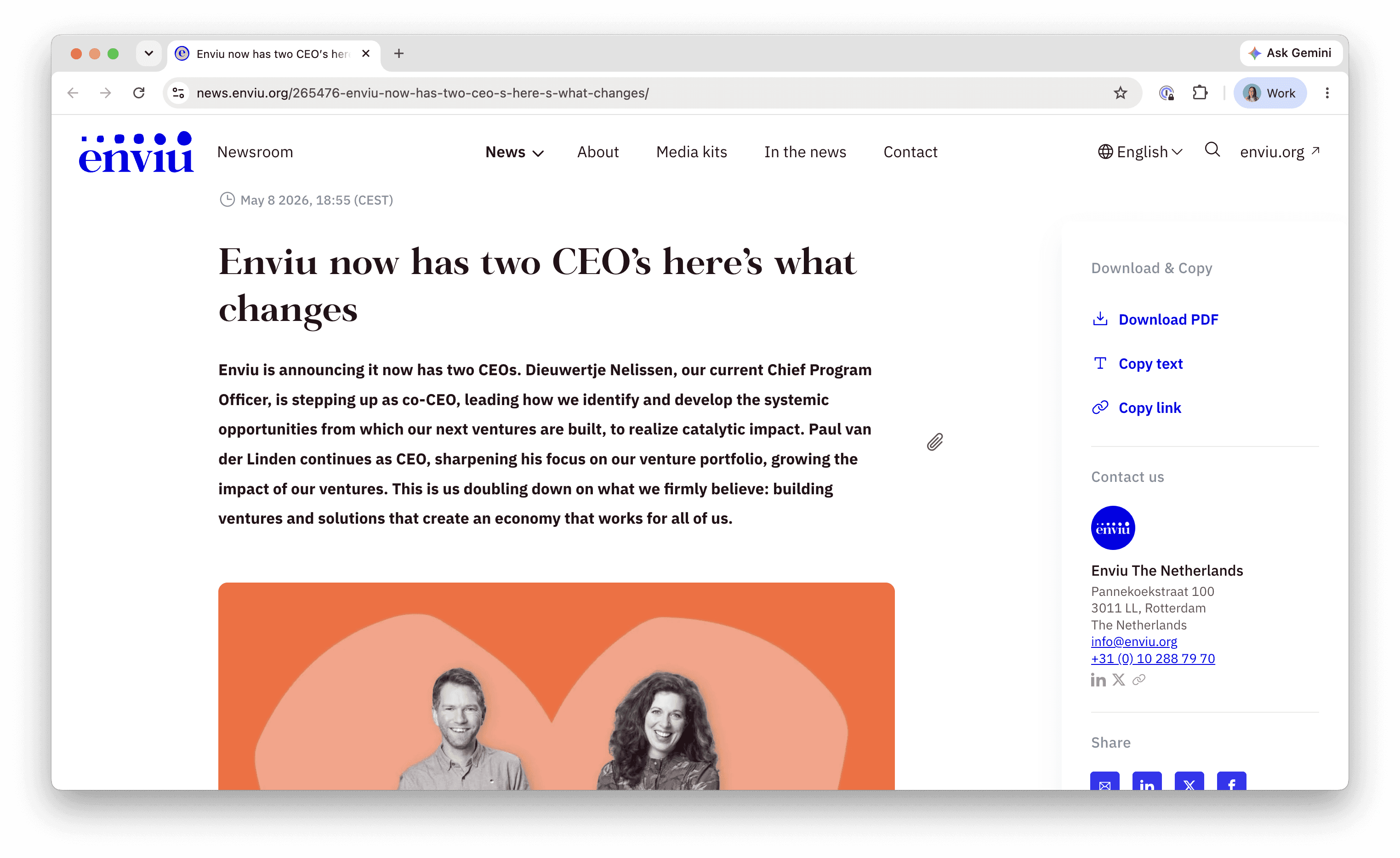
▲ Enviu used its newsroom to announce a leadership transition in its own words, explaining the reasons behind the change and what it meant for the organization. Publishing the update in its newsroom ensured stakeholders could access accurate information directly from the source.
4. It replaces ad hoc publishing with an editorial rhythm
Without a shared editorial process, every announcement becomes a standalone project. Corporate communications teams assemble the same inputs, chase the same approvals and make the same publishing decisions from scratch. The result is often a burst of activity around major news, followed by long periods of silence.
A digital newsroom creates a more deliberate rhythm. A shared content calendar brings company milestones, executive perspectives, research, events and regional stories into one pipeline. Teams can see what’s coming, plan approvals earlier and identify opportunities to develop one story across formats and markets.

▲ Lynk & Co uses its newsroom to publish a steady stream of news across multiple markets and languages, giving regional teams a consistent publishing framework while keeping the brand's communications active and coordinated year-round.
A clear online newsroom strategy can help you turn your newsroom into an active editorial channel.
5. It reduces unnecessary agency and IT dependency
Agencies add expertise and capacity. IT teams maintain essential infrastructure. Neither should be needed for every routine newsroom update.
Communications teams lose speed when an outside supplier must retrieve basic assets or a developer must correct an executive biography. A functioning newsroom gives the people responsible for corporate news practical ownership of publishing, editing and removing content.
What does a good corporate newsroom look like?
There’s no single blueprint. A consultancy may need a dependable media resource, while a consumer brand might build an editorial destination.
The examples below show those different models in practice. Each newsroom serves a distinct communications strategy, but all three keep information current, make ownership visible and help visitors reach the right information without going on an archaeological expedition.
BCG: a practical media resource
Boston Consulting Group’s newsroom brings together the latest press releases, company fact sheets, leadership information, logos and corporate reports.
Its global directory helps journalists find the right communications representative by region. This is an important detail, because missing or hard-to-find contact information costs brands media coverage.
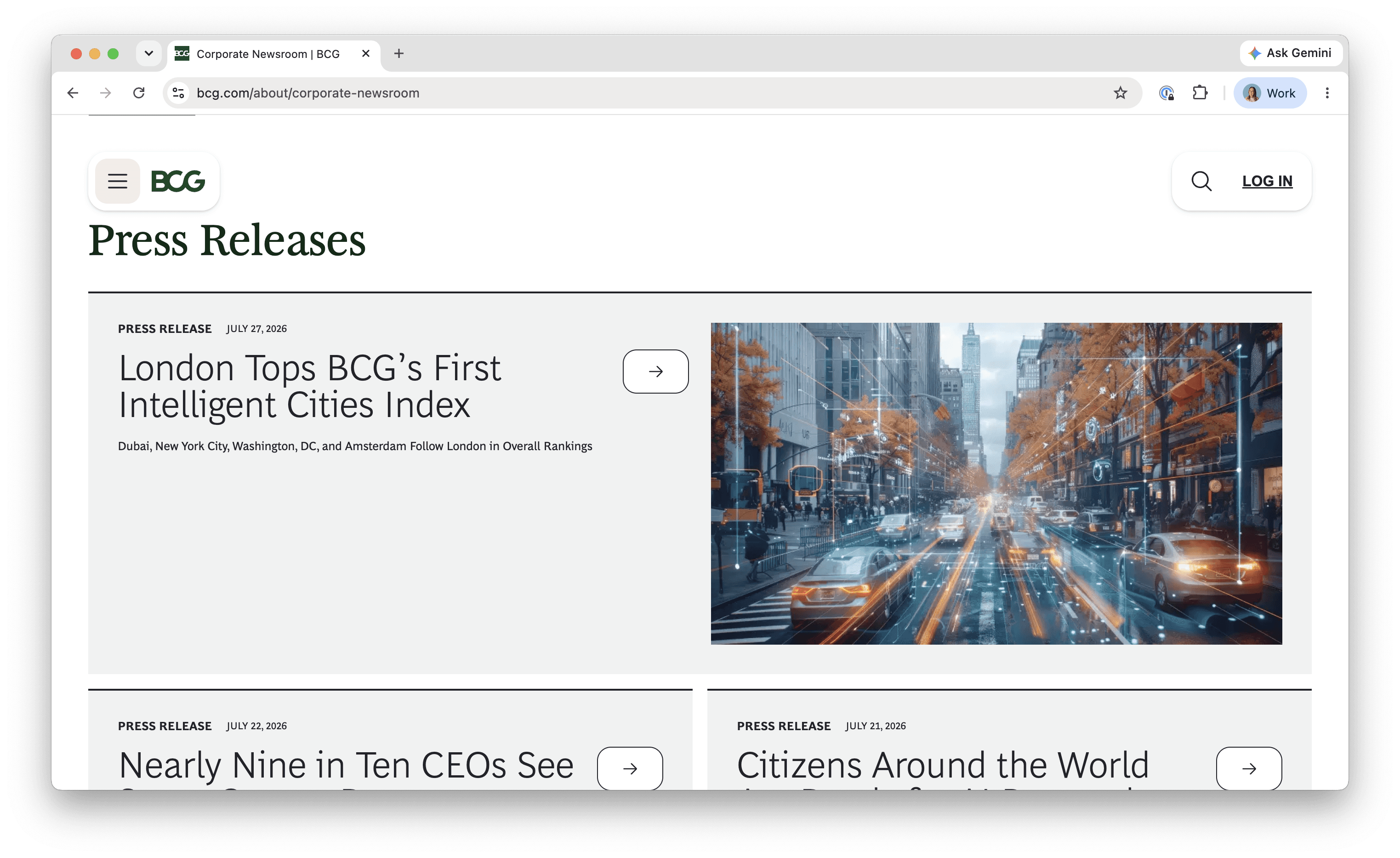
Why it works: The newsroom acts as a working media resource, not merely a reverse-chronological list of announcements.
Apple: corporate news turned into owned media
Apple treats its newsroom as an owned publication rather than a repository for company announcements. It combines press releases, executive updates and long-form stories in one polished editorial hub.
Journalists can copy releases, download media assets and find official quotes.
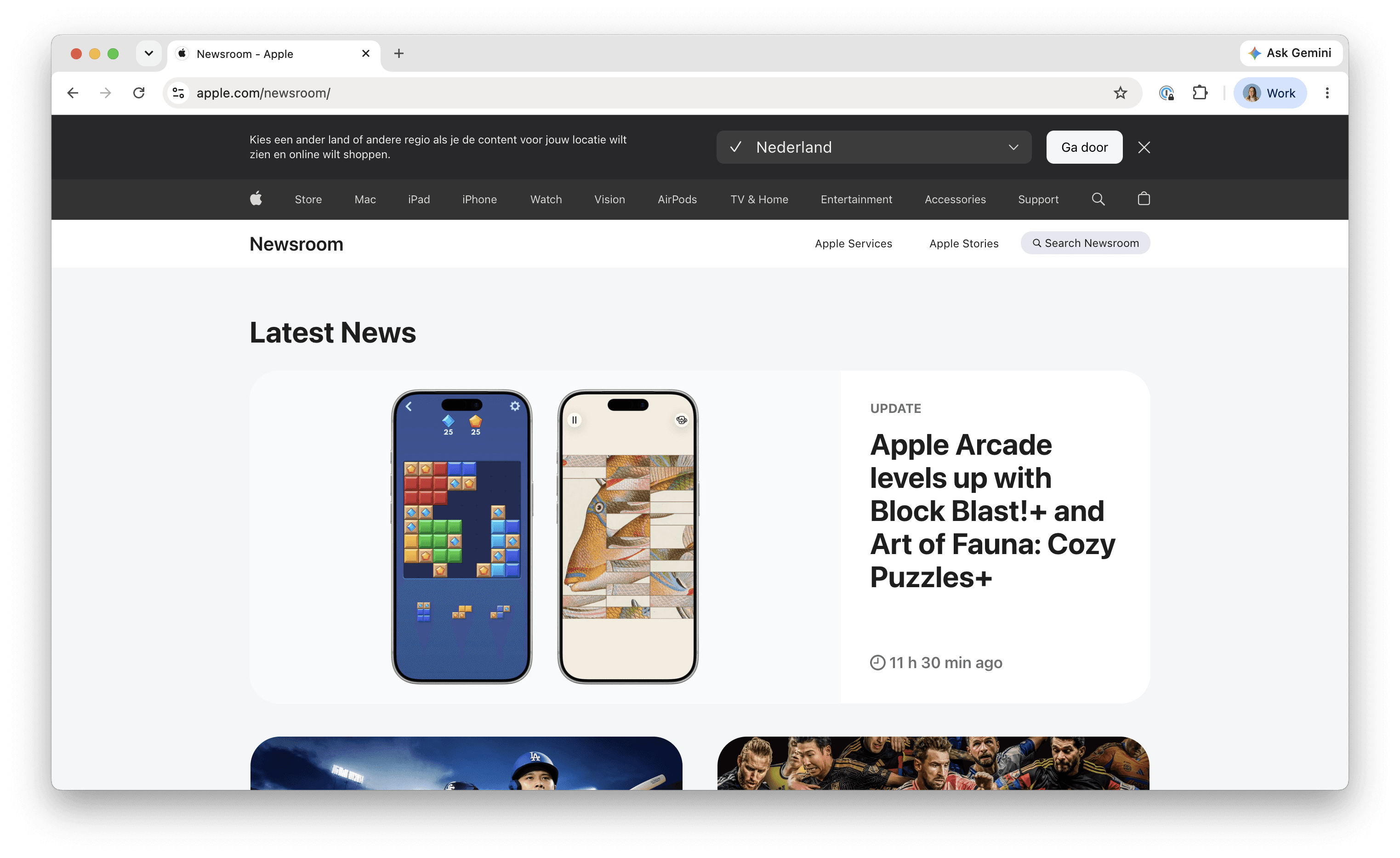
Why it works: The online newsroom gives Apple an authoritative home for company news. It offers journalists and other audiences truly useful, editorially rich content.
Minor Hotels: one newsroom for a global brand portfolio
Minor Hotels uses a single PR.co-powered newsroom to bring together news from its global hotel portfolio while preserving the identities of brands such as Anantara, Avani, Tivoli and NH Collection.
Journalists can browse by brand, region and language, access media kits and contacts, or subscribe only to relevant topics. Meanwhile, regional newsrooms and language support help teams collaborate across markets to deliver a coherent narrative.

Why it works: The newsroom gives Minor Hotels a cohesive global media presence while giving each brand and region enough room to tell its own stories.
For more inspiration, explore PR.co’s other newsroom examples.
How should a corporate newsroom be structured?
A polished media center can’t compensate for confusion behind the scenes. Someone must decide what gets published, who approves it and how local teams participate.
A workable newsroom, therefore, usually includes:
A senior sponsor: The sponsor protects the newsroom’s mandate and helps resolve competing priorities (useful when every department believes its update deserves top billing).
A managing editor: The managing editor owns the content calendar, maintains standards and sees the whole corporate narrative. In a smaller team, this may be one part of the communications lead’s role.
Subject and market editors: These contributors bring specialist knowledge and local context from regions or business units. The central editor sets standards and coordinates major stories, while market editors contribute local context and publish within agreed permissions.
A note on internal comms vs. external comms: Internal communications may also contribute stories and source material, but the corporate newsroom described here is primarily built for external audiences, including journalists, influencers, customers, investors and other stakeholders.
Establish clear editorial governance
The newsroom also needs an operating model that turns ownership into everyday decisions: what belongs in the newsroom, who can move a story forward and when an issue needs to be escalated. Without those rules, even a well-structured team can slip back into inbox approvals.
Editorial governance should establish:
What belongs in the newsroom.
Who can draft, edit, approve and publish.
What local teams can adapt or publish independently.
How translations and versions are managed.
How corrections and outdated content are handled.
Which results the team measures.
Why does running a newsroom get harder with multi-market publishing?
Establishing a company’s first corporate newsroom can be relatively simple: one calendar, one folder, a spreadsheet and a weekly meeting may be all that’s required.
But when the communication teams’ activities start to spread across borders, or where different brands need to be covered, things become more complex:
Central teams need oversight, but local teams need enough autonomy to move quickly.
Brand language should remain consistent, but direct translations rarely suit every market.
Global announcements need coordination, while localized PR should also be prioritized.
Teams must know which version is current and who approved it.
Shared documents and meetings can support part of this process, but usually aren’t enough once local newsrooms, multi-market media assets, complex approval workflows and audience-specific content distribution all need to work together.
Do you need a corporate newsroom platform?
Once teams publish across several brands, markets or languages, a dedicated software platform can provide the infrastructure to manage permissions, local adaptations, assets and publishing workflows in one place.
PR.co, for one, gives central PR teams editorial and brand oversight while allowing regional teams or agencies to manage the stories, contacts, subscribers and media kits relevant to their markets.
Our platform also helps the newsroom serve as an authoritative source of company information. Clear content structures and structured data make that information easier for people to navigate—and for search engines and AI systems to interpret.
Make your newsroom easier to run as it grows
Software can’t decide which stories matter or replace the judgment of an experienced communications team. But it can prevent good editorial teams from buckling under the pressure of more markets, brands, languages and approval layers.
PR.co gives central communications teams oversight while allowing local teams to publish within clear permissions. Stories, media assets, contacts and regional newsrooms stay connected, without routing every routine update through IT.
If you’re still comparing platforms, read our guide to the best newsroom software.
If scattered tools, competing versions or complex approval workflows are starting to slow your team down, book a demo to see how PR.co could support the way you work.
FAQs
1. What’s the difference between a corporate newsroom and a press office?
A press office focuses primarily on media relations, including journalist inquiries, official statements and reactive responses. A corporate newsroom and the team behind it have a broader remit: they plan, govern and publish the company’s ongoing flow of stories across channels.
2. What’s the difference between a corporate newsroom and an online newsroom?
The corporate newsroom is the editorial operating model. The online newsroom is the public-facing website or web section where company news, media contacts and downloadable assets are published.
3. Do you need newsroom software to run a corporate newsroom?
Not necessarily. A small communications team may be able to run a corporate newsroom using a shared calendar, file storage and its existing CMS.
However, dedicated newsroom software becomes valuable as the operation grows. These newsroom platforms bring approvals, permissions, assets, translations and publishing workflows together across contributors, brands and markets.