Media Relations
Learn what media relations is, why it matters for your brand, and practical tools to build a winning media relations strategy from PR pros, comms teams and founders.


Last updated on

TL;DR: AI has reshaped how news is found, written and distributed, which makes media relations more complex (and important) than ever. While technology can drive scale, human relationships, trust and relevance ultimately determine who gets covered. This guide combines insights from senior journalists and public relations leaders to help you navigate media relations confidently in 2026.
Public opinion plays a decisive role in brand reputation. Research shows that share prices can fall by more than 35% following a PR crisis, which underscores the substantial risks involved.
As AI and other technologies rapidly reshape the communications landscape, the importance of brand reputation remains one of the few constants. And the media continues to be a powerful force in shaping it, for better or worse.
Strong media relations in PR help brands build credibility, shape public perception and earn trust. But the landscape is tougher than ever: newsrooms are smaller, reporters are expected to produce more with less, and media practitioners’ inboxes are flooded with pitches.
This is why a well-executed media relations strategy is as critical as ever.
Whether you’re new to media relations or refining an existing approach, you’ll find this guide invaluable. In question-and-answer style, we share media relations best practices and practical tips to help you build, strengthen and future-proof your media relations strategy at a time when the playbook is changing fast.
How should we build a successful media relations strategy in 2026?
A strong media relations strategy starts with a clear sense of purpose. The reality is that purpose-driven brands consistently outperform their peers. For example, Unilever’s purpose-led brands and campaigns (think Dove’s “Real Beauty” campaign) have grown faster than the rest of its portfolio.
Your brand’s media relations strategy should be shaped by who you are, what you stand for and the message that drives your narrative. Get this right, and every message, article, social post and podcast episode will be easier to create, pitch, distribute and amplify.
In this section, we cover how to:
Establish a strong foundation for communications
Get your messaging right
Shape your media relations strategy
Build a high-impact online newsroom
Establish a strong foundation for communications
Establish a strong foundation for communications
A media relations strategy should be built on rocks, not sand.
Think of it this way: if you fill a glass jar with sand first, there’s no room left for the rocks. In media relations, the rocks are your highest-impact priorities, while the sand represents the smaller tasks that support them.
In practice, this means starting with a clear purpose and focusing on what truly drives long-term success.
To help you organize your thoughts, ask yourself:
Why does our company exist?
What is our story?
What is the Big Hairy Audacious Goal (BHAG) we’re working towards?
Who do we serve?
What are our unique selling points?
The answers to these questions are your rocks. When you’re clear on them, you can move on to the sand: shaping your messaging.
Get your messaging right
To a large extent, people still trust what they read in the news. Clear, consistent messaging ensures journalists accurately understand your product or service and helps audiences quickly grasp why it matters.
There are four kinds of messages to focus on:
Brand messaging: Your brand messaging is the core ideas and language that communicate who you are, who you serve and why you matter. It should be clear, consistent and memorable. A tagline like Nike’s “Just Do It” is one short expression of that messaging.
Campaign messaging: Every piece of content, including campaign messages, should consistently reflect your brand values. A famous example of this is Patagonia’s “Don’t Buy This Jacket” campaign. Rather than pushing sales, Patagonia discouraged unnecessary consumption to reinforce its brand’s promise: to make the best products, cause no unnecessary harm, and use business to help solve the environmental crisis.

Product and service messaging: Product and service messaging clarifies what you offer, who it’s for and what differentiates it. While it may play a smaller role in brand storytelling (especially outside technical or niche publications), it’s critical to define your positioning and communicate your unique selling points clearly and confidently.
Thought leadership messaging: Thought leadership messaging showcases your leadership team’s expertise to position your brand as an authority in its field. It increases your chances of media coverage and being quoted as a source. The most effective thought leaders demonstrate both expertise and perspective. They also typically align their personal values with the company's principles, so their insights resonate and strengthen the brand’s reputation.
Once you have established the messaging for these four pillars, you need to look at them holistically. While each serves its own purpose, they all need to connect to each other to convey your core promise (and purpose) as a brand.
Shape your media relations strategy
Coined by Spin Sucks founder Gini Dietrich in 2014, PESO® is a simple framework that helps teams plan and execute an integrated media relations strategy. At the same time, it helps them to stay aligned with media relations best practices.
PESO® stands for four core channels:
Paid media: Channels that require a budget to distribute content.
Earned media: Coverage gained through working with journalists and media outlets with an existing audience.
Shared media: Amplification through social platforms and existing communities.
Owned media: Channels your company controls directly.
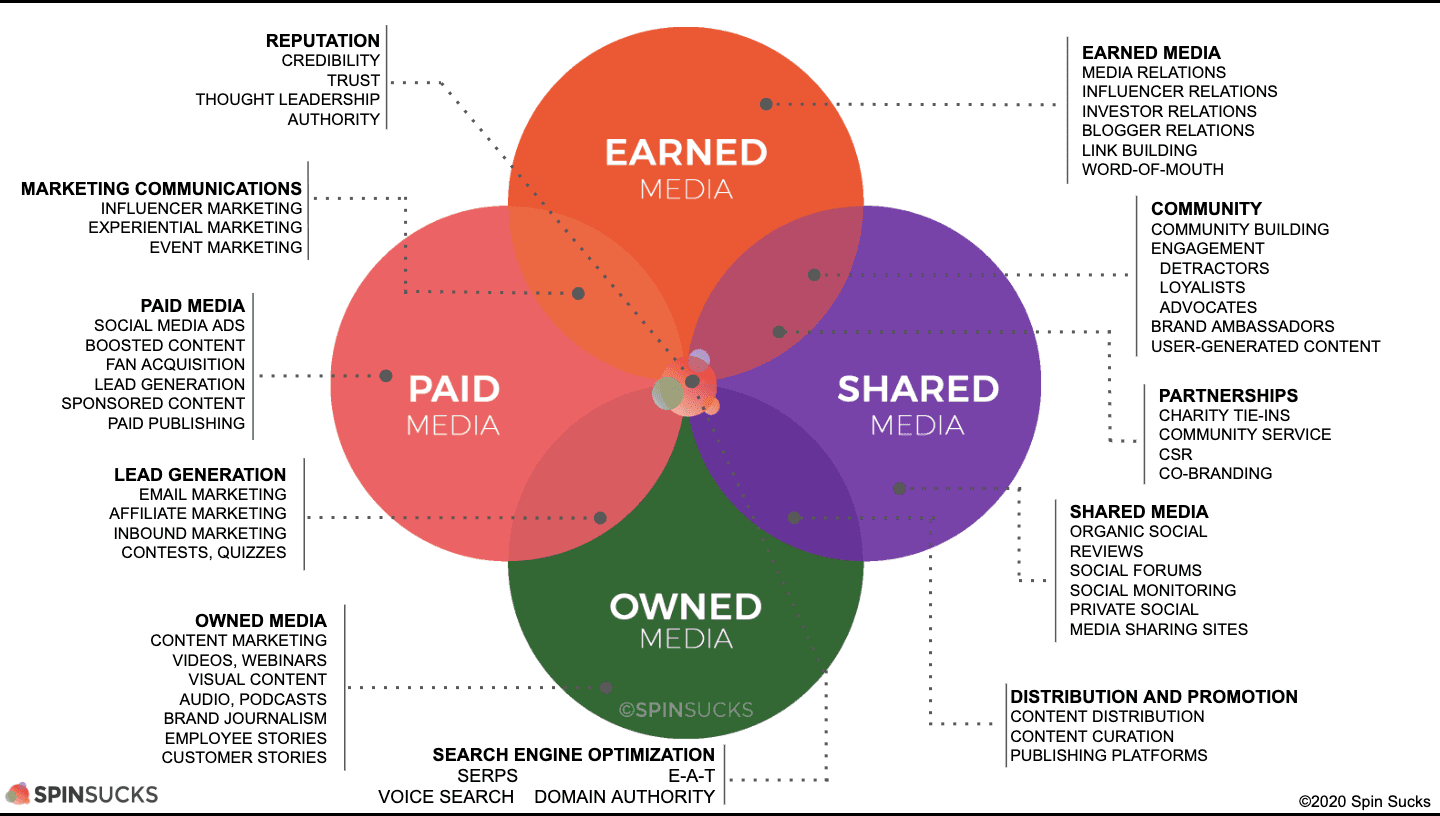
To use the PESO® model effectively, these channels need to work together. Here’s how each one fits into a strong media outreach strategy:
Paid media: Paid partnerships can help you reliably reach the right audience with messages that resonate. When combined with influencer marketing and social amplification, it’s especially effective for scaling major launches or announcements.
Earned media: This type of media coverage is built on relationships. It requires closely tracking your industry’s media landscape and connecting with the right journalists and content creators to get your stories in front of established audiences.
Shared channels: LinkedIn, Instagram, Facebook, X, Reddit (still an underrated channel) and other social platforms have become key sources for journalists and independent content creators to discover stories. Rather than relying solely on press outreach, brands need to share news, opinions, and thought leadership where content creators and journalists already spend their time.
Owned channels: Modern media relations starts with what you own. In the era of social media uncertainty and Generative Engine Optimization (GEO), owned channels give you full control over your brand narrative.
Ideally, every press release, media mention, guest article, podcast appearance or social post should link back to your own website or newsroom. This consolidates authority in one place, strengthens your credibility with search engines, and trains AI models to recognize your owned properties as the primary, trusted sources of information about your brand.
Online newsrooms with curated beat sections, media kits, leadership bios and more are the way forward for PR media outreach. These owned media platforms keep your brand visible and relevant. Importantly, as PR continues to expand into brand journalism, thought leadership and content marketing, an online newsroom serves as the central hub that brings these efforts together.
Lukas Keller, PR & Newsroom Lead from Brack.Alltron, says: “Our work is the primary data source for tomorrow’s AI. Those who lack high-quality media coverage and well-maintained newsrooms simply won’t appear in AI search results.”
Build a high-impact online newsroom
Let’s take a closer look at why an online newsroom is non-negotiable for ambitious brands set on being visible to journalists, customers, investors, search engines and AI models.
A PR.co-powered newsroom, for example:
Supports outbound PR: Pitching journalists is far more effective with an online newsroom. It gives journalists a reliable, centralized source for your content and makes it easy for them to verify your story and cut through the noise of AI-generated content.
Boosts inbound PR: Online newsrooms have a major impact on inbound PR. By providing journalists with everything they need to independently create a story (e.g., press releases, photos, videos, audio clips), you enable a self-serve approach.
Improves SEO: A well-designed, well-structured newsroom strengthens your domain authority, which directly influences your search engine rankings. When your newsroom is organized with clear categories, optimized metadata, internal links and regularly updated content, search engines can more easily crawl, index and understand your expertise (more about this later).
Drives AI visibility: As mentioned before, a well-structured online newsroom also improves your brand’s visibility in AI models. It provides these models with a clear, structured and authoritative source of information that they can easily understand and reference. Although Google and AI can easily interpret content using semantic HTML alone, you’ll boost your chances of being cited in AI models when you make that information easy for them to process. Bite-sized, structured data is the way to go. PR.co’s CEO, Jeroen Bos, says: “Structured data also provides additional meta information about the article that isn’t shown to human readers.” Our article on 10 ways to get your brand cited by AI is a must-read if you’d like to nail AI visibility this year.
Boosts brand credibility: Online newsrooms allow you to curate and continuously refine your brand’s content to reflect your values and current campaigns. If you feature the opinions of company thought leaders and publish original data, you also build trust. Consistency in quality and focus can ultimately position your brand as a reliable, credible authority.
Saves PR teams time: Repetitive requests for logos, headshots, bios or contact details can eat up hours. An online newsroom improves journalist relations by helping them and other stakeholders quickly find what they need. For teams that work across agencies, regions or departments, a centralized media hub keeps content consistent and frees up your team to focus on other priorities.
Controls the narrative: An online newsroom gives you control over your story. In this way, it protects your brand reputation in an era defined by misinformation and fake news.
Learn more about how to use an online newsroom to connect directly with your audience.
Quick tips on how to create a high-impact newsroom
To make your newsroom truly effective, you’ll need:
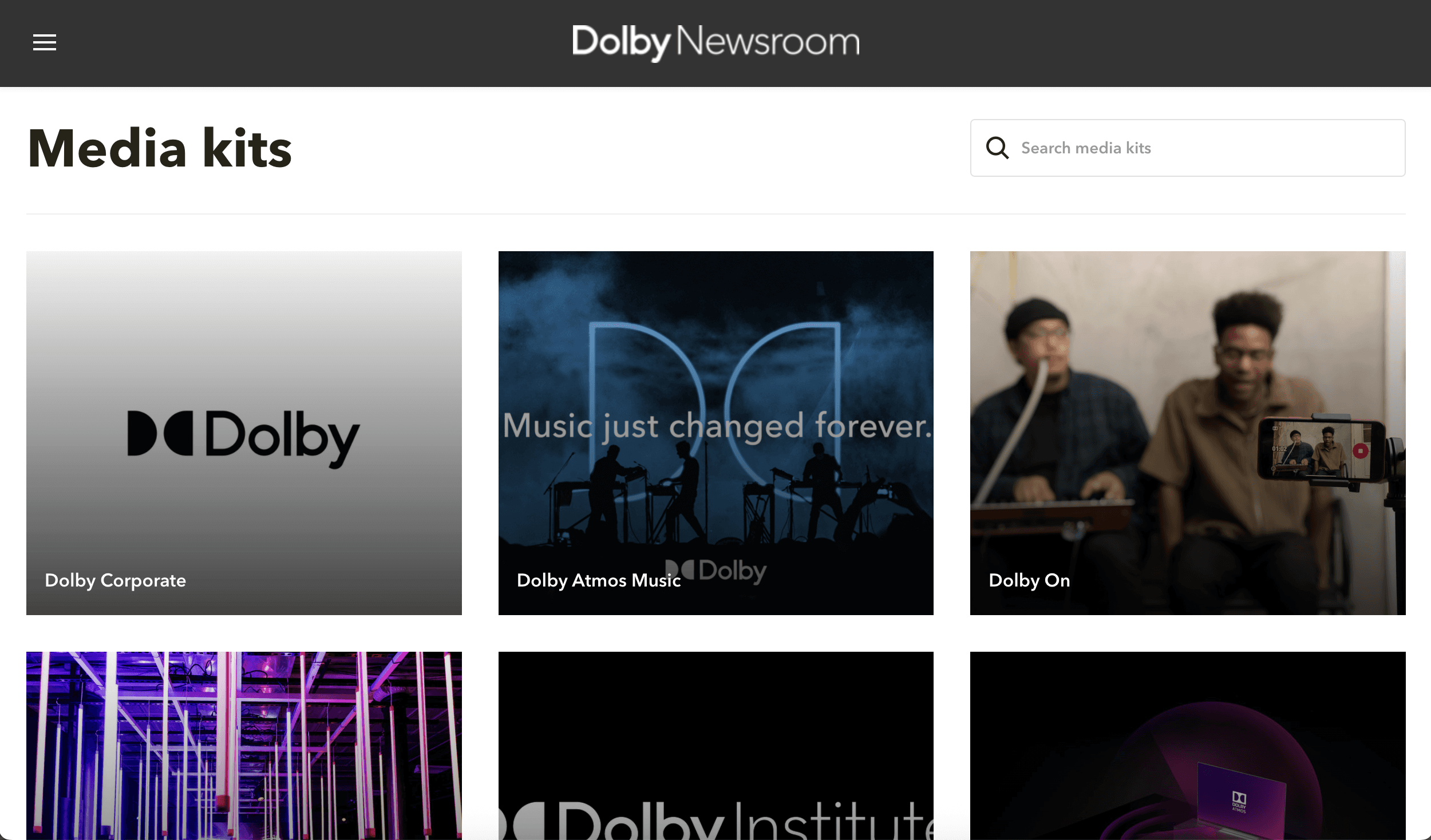
Brand assets: Logos, images and other media assets journalists and other content creators can easily access and use.
News archive: A clear, concise archive of brand news and company milestones to help journalists and other stakeholders understand your story over time.

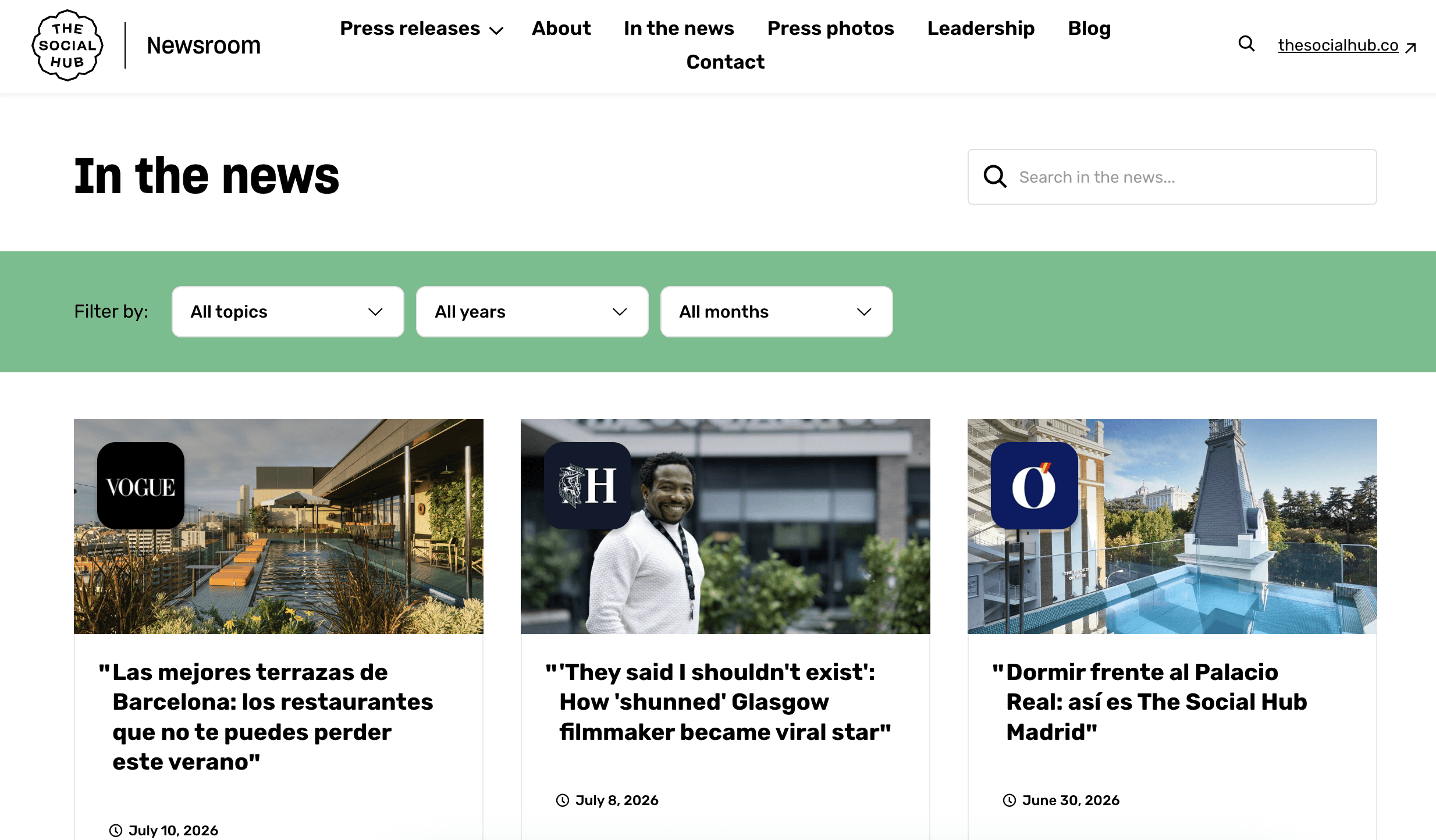
Third-party coverage: Clips to articles, interviews and mentions from other outlets all help to tell your brand story.
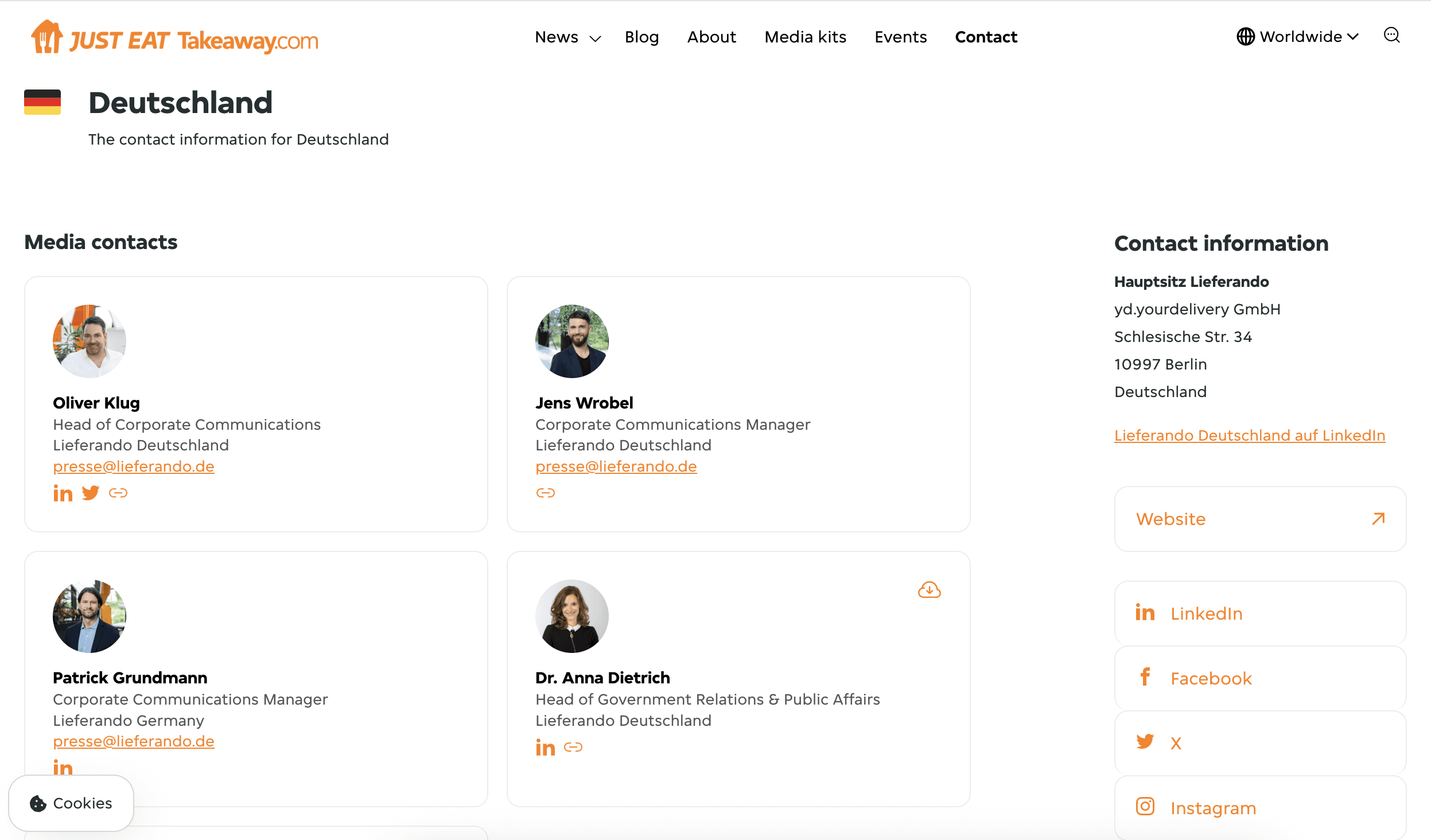
Contact information: Direct links to spokespeople, PR contact and relevant departments make reporters’ lives easier.
Read more about the types of newsrooms currently available. Keen to learn more about our newsroom solution? Schedule a demo.
What are the AI-driven PR strategies brands should understand today?
The media and public relations landscape has changed dramatically since the widespread public adoption of generative AI tools accelerated following the launch of OpenAI’s ChatGPT in November 2022.
Are you up to date? In this section, we cover:
How to use AI to research and pitch journalists
Dos and don’ts of using AI in media relations
AI and media monitoring
How to use AI to research and pitch journalists
AI is a powerful research tool that can help you sharpen your pitches and focus your PR media outreach efforts. The tech can help you to:
Sense check your pitches. Use AI to assess whether your angle is relevant and likely to resonate with journalists covering your industry.
Formulate clearer ideas. AI can scan for what journalists tend to cover and generate ideas to help make sure your story hits the mark.
Simplify your outreach efforts. Use AI tools to identify relevant journalists based on past coverage.
Dos and don’ts of AI in media relations
To be effective, AI needs to be used thoughtfully. Here’s how to maximize the benefits of AI in your PR media outreach without risking credibility or control:
Do:
Use AI to automate repetitive tasks such as media monitoring, reporting and first drafts of emails, so you can focus on media relations strategy and journalist relations.
Use AI insights to build digital personas of journalists and publications to help you tailor pitches more effectively.
Be transparent about how you use AI tools, particularly when handling data.
Set clear internal guidelines for ethical AI use to keep your output responsible and trustworthy.
Fact-check AI-generated content. Small errors can quickly undermine trust.
Don’t:
Rely on AI to write press releases or pitches without human oversight. Over-automation often leads to generic or inaccurate messaging.
Treat AI as a replacement for human judgment. It should support, not substitute, critical thinking and creativity.
Read more about the dos and don’ts of using AI in PR.
AI and media monitoring
AI-powered media monitoring has helped many of the world’s top public relations teams move from reactive reporting to proactive insights. The technology has become an important part of the modern media relations process and can:
Track brand mentions at scale: AI tools can monitor news, search and social channels in real time, surfacing relevant brand mentions faster than humans can.
Spot trends and risks early: AI-powered predictive analytics can identify patterns in coverage and conversations, helping you anticipate media trends or reputational risks before they escalate.
Monitor search visibility in AI-driven results: Various new AI tools can help you understand how your content is being found and summarized in AI models like ChatGPT, Claude and Perplexity.
Detect fake news and suspicious content: AI-powered monitoring can flag unusual content in real time. This helps you to protect your brand from misinformation and impersonation.
How can we write our pitch so it gets picked up?
Media relations in PR is about storytelling. The goal is to craft and share stories that grab attention, build credibility and secure coverage.
In this section, we cover text-based, visual and audio storytelling.
Text-based storytelling
In this section, we look at:
How to produce a standout press release
How to create thought-leadership content
How to pitch journalists
How to produce a standout press release
A strong press release grabs attention, provides key facts, and ultimately, makes a journalist’s job easy. Start with:
A short, attention-grabbing headline that sparks curiosity, shows value and highlights your unique angle.
A structured format with key information at the top: who, what, where, when and why.
Factual and concise writing. Keep the fluff to a minimum.
A short summary (boilerplate) that provides background information on your company.
Quotes to give a human voice to your story.
Relevant links to your newsroom, website, social channels and/or prior coverage to boost credibility (always use UTM tags to track clicks and measure performance).
Links to resources such as datasets, reports or fact sheets (always use UTM tags to track clicks and measure performance).
Contact information for and LinkedIn profiles of spokespeople.
How to create thought leadership content
Thought leadership content positions your brand and its leaders as industry experts. This builds credibility with media contacts, investors, target customers, company employees and other stakeholders.
Tips for effective thought leadership:
Target content to the publication’s readership.
Stay focused on your goal.
Avoid jargon unless you’re writing for a niche audience.
Offer unique, thought-provoking opinions.
Avoid sounding salesy. Subtly reference your company when relevant.
Link to related content in the publication.
Use timely topics or produce evergreen content (your own data is gold).
Fact-check all claims and cite sources.
Include keywords for SEO and AI discoverability.
Our tips on structuring a press release for AI visibility also apply to thought leadership content.
How to pitch journalists
Journalists are under intense pressure to do more with less, which means anything that slows them down will be ignored. In fact, 86% of journalists reject pitches for being irrelevant.
Brands that win coverage are the ones that make reporting easier. If you effectively track both traditional coverage and conversations across social media platforms, it becomes easier to tailor your pitches and nail your press outreach. Media monitoring tools like Meltwater and Onclusive are strong options.
Here are a few proven best practices for pitching journalists in 2026:
A perfect publication fit means nothing if the individual journalist doesn’t cover your angle. Study their last 5–10 articles before you pitch.
Relevance is the new currency. If your story isn’t timely, specific and audience-first, don’t send it.
Build plug-and-play pitch kits. Include pre-approved images, data points and executive quotes. Press releases with at least one executive quote have, on average, a 40% higher media pick-up rate. Host everything in your online newsroom (never bury it in a PDF).
Use AI strategically, not generically. Persona-led prompts, using tools like Crystal Knows, ChatGPT and Claude, can help you match tone and format to each journalist’s style. Just always include a human in the loop.
Respect embargoes and send reminders.
Visual storytelling
In a world where attention spans are only getting shorter, strong visuals are a powerful way to capture interest, fast. We’ll cover:
Hosting media kits online vs sending PDFs
How to create a media kit
Why visuals are so important
What journalists look for in a photo
Hosting media kits online vs sending PDFs
Forget PDFs. They’re slow to download, painful to read on mobile, quickly outdated and frustrating for journalists to work with. Plus, they block search and AI discoverability.
Comprehensive online media kits, in turn, can adapt to every communication channel, give you more control over your story, and are easily discoverable, an important part of a modern PR strategy.
Your newsroom is ideally suited to hosting your media kits.
How to create a media kit
The more comprehensive your media kit, the better your brand will be represented. Here’s what to include:
Team portraitsJournalists will likely cover stories about spokespeople or management, so high-quality photos are a must.
Photos and videos of the office(s)Your office is an extension of your brand. Journalists and other content creators want to see where the work happens and the people behind the scenes.
Product shots Showcasing your products in their best light is a no-brainer if you’re a product-based business. Include high-quality photographs and videos.
Mockups and screenshots of your softwareIf you’re a software provider or offer tech solutions, include visual representations of what you offer.
Event photographyEvents are a great opportunity to build your image bank. Investing in professional photography will pay off in the long run.
Brand assetsLogos, backgrounds, fonts and colours are all part of your brand’s visual identity. Ensure these are included in your media kit.
Examples of standout media kits:
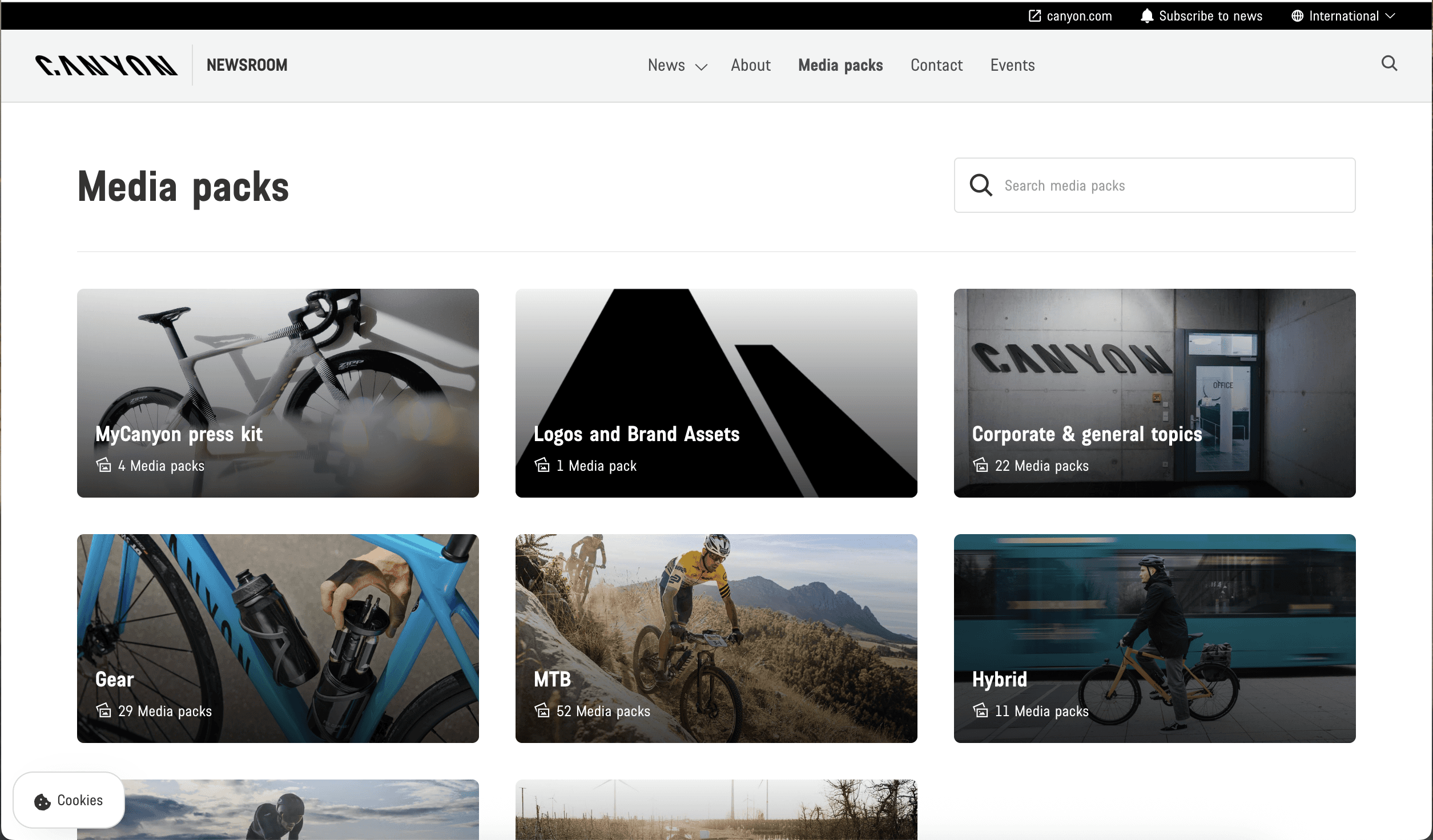
Canyon: This brand’s media kit is built into its online newsroom and has an impressive mix of visual assets to help tell a compelling brand story. The simple navigation makes everything easy to find.
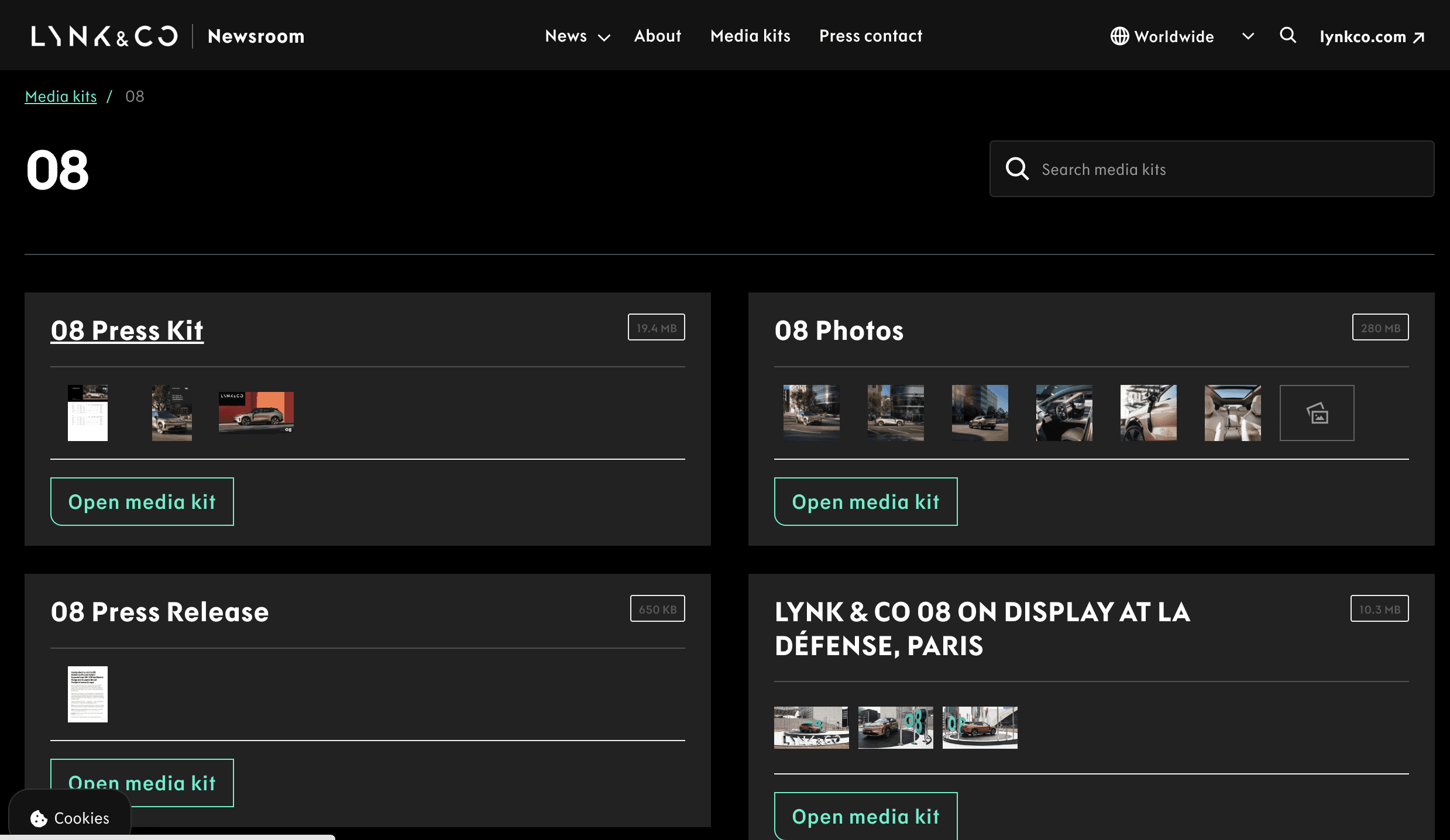
Lynk&Co: Lynk&Co organized its media kit into clear categories. With dedicated sections for images and videos, leadership bios, headshots and latest stats, they offer everything journalists need to write a story independently.
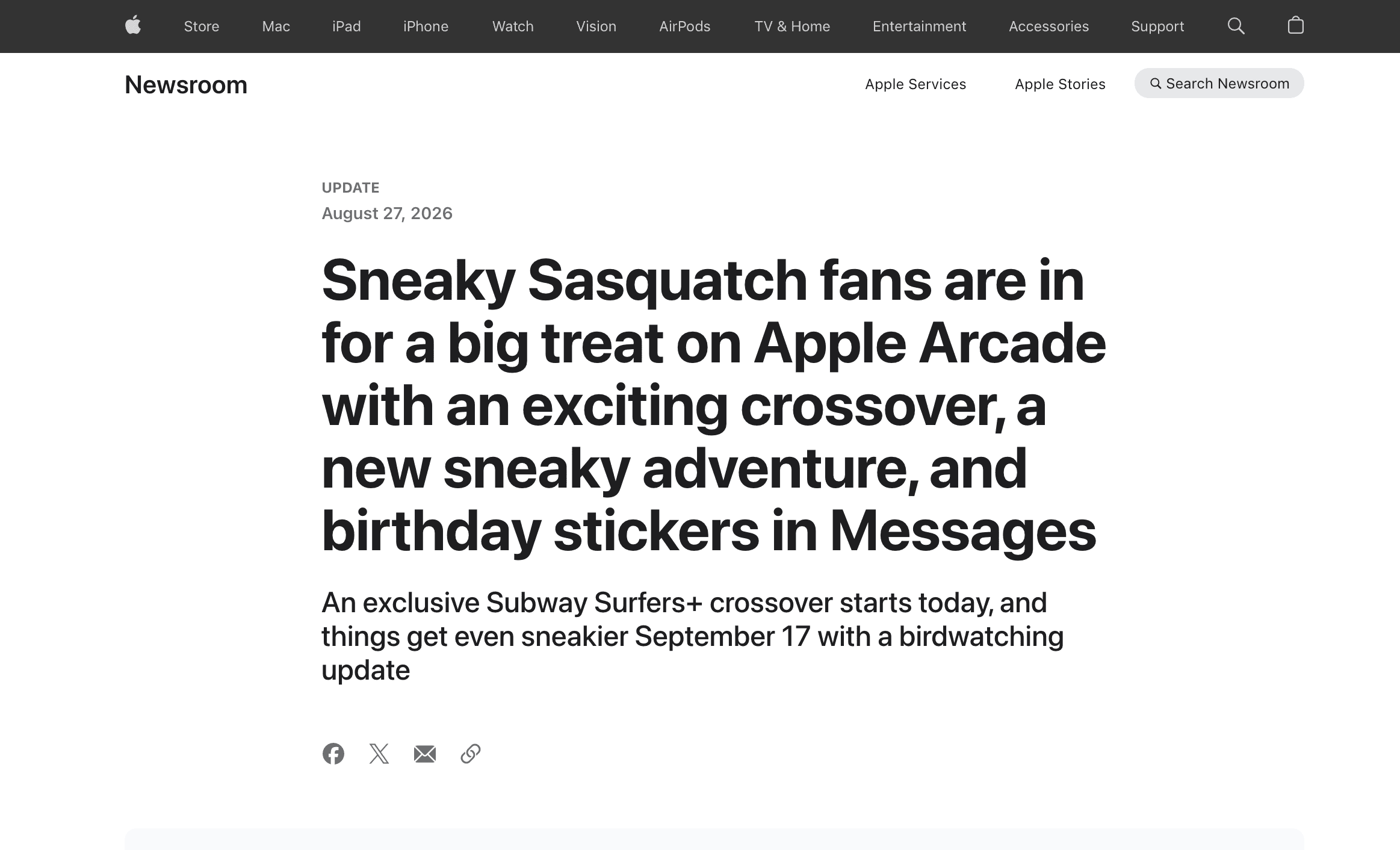
Apple: This tech brand leads the way with one of the best newsrooms out there. Most product-related articles include downloadable media as well as a “copy text” button to easily share Apple’s news.
Creating a media kit? Discover what makes a great media kit, plus some examples of media kits from PR.co clients.
Why visuals are so important
Poor quality images can be more damaging than no images at all and are seen as a reflection on the quality of the piece you’re pitching to journalists.
If you’re budget-conscious, these cost-effective ways to source visuals may help:
Find emerging talent. Less experienced photographers will be thrilled to get an opportunity to build their portfolio, and you’ll get great photos at a fraction of the price.
Browse Unsplash and other free stock libraries for suitable images.
Tap into your customer base and keep an eye on the pictures they’re posting.
Encourage team members to capture photos at events and to share them with you. Offer an incentive to boost participation (e.g., a prize for the photo of the year).
What journalists look for in a photo
Alex Ortiz, a Senior Photo Editor for The Guardian, The Observer and Sunday Times Magazine, shares her tips on using images when pitching journalists:
Make sure images are high-resolution. This is usually 300 DPI for print and 72 DPI for online.
Send images as JPEGs for online publication and TIFFs for print.
Prioritize authenticity. Stock photography can look staged and generic. Instead, consider landscape photos where appropriate or browse Death to Stock, which specializes in authentic photography.
Avoid sending too many images. It’s better to choose a select 10 images than overwhelm journalists.
Share both landscape and portrait images to make sure they’re suitable for all channels.
Caption images and make sure the credits are included in the metadata.
Audio storytelling
Audio content conveys nuance, emotion and authenticity that written text simply cannot. We look at two audio channels that will really help you shine when pitching journalists:
Podcasts
With an estimated 584.1 million podcast listeners globally, podcasting is an effective way to build credibility, boost your profile and open the door to more speaking opportunities.
To land more podcast guest spots, focus on:
Research: Vet podcasts carefully to ensure they’re high quality and have an engaged audience.
Audience: If your target audience listens to a particular show, use tools like Listen Notes to discover other podcasts they subscribe to.
Quality over quantity: Be selective and focus on shows that truly align with your expertise.
Personalization: Reference past episodes, address the host by name and clearly explain why you’re a strong fit for the show when pitching.
Perspective: Highlight the unique insights and thought leadership you can offer their listeners.
Speaking events
Journalists often turn to thought leaders and subject-matter experts for quotes. This makes public speaking a powerful driver of media coverage. A strong speaking portfolio can increase your brand’s visibility, but first, you need to build both your reputation and your range.
A few practical tips:
Start small: Your company spokespersons may need to accept unpaid or smaller events initially to build credibility and recognition.
Record your talks: Event organizers want to see spokespersons in action before committing.
Use your communities strategically: Promote your speaking engagements on relevant online communities to reach audiences who will benefit from your topic.
Research: Tailor your speaker pitch just as carefully as a media pitch.
Stay on brand: Make sure your brand’s talk aligns with your broader messaging and brand strategy.
Build relationships: Connect with event organizers and speakers to increase the chances of future opportunities.
Be approachable after your talk: Stay visible so attendees, journalists and potential collaborators can easily connect with you.
Create a speaker sheet: Include a clear talk description, professional photos, videos, testimonials and a short bio to make booking easy.
Finally, extend the life of your company talks by repurposing them into other content, such as white papers, webinars or social posts. A single speaking slot can fuel months of visibility and coverage.
How can we build a strong media network?
Media relations is about building relationships with media contacts (hence the name). In this section, we take a closer look at:
How to build a press list
How to segment your contacts
How to connect with journalists
How to use events to build media relationships
How to build a press list
Media databases can be a helpful starting point, but they’re often outdated. You may be better off building your own press list from scratch.
Three PR pros share their top three tips for how to do it well.
Creative freelancer Guy van Koolwijk says: “Your network is your superpower.”
Send previous coverage with your pitches to build credibility.
Go beyond contacts and focus on building connections.
Use social media and search engines to find the bios of journalists you want to connect with.
Bieke Groenink, freelance communications consultant, says: “When you’re in PR, you need to be a detective.”
Don’t rely on databases. Check contact details on LinkedIn to make sure they’re current.
Ask peers or former colleagues to share contacts and be willing to return the favor.
Schedule in-person coffee catch-ups with key journalists throughout the year to build strong relationships. These connections will last.
Matias Rodsevich, founder and CEO of PRLab, says: “The concept of building relationships with journalists is quite exaggerated.”
Find journalists already covering topics related to your industry.
Use SEO tools like SEMrush to analyze competitor backlinks and identify reporters covering similar stories.
Ditch spreadsheets and use a CRM to manage media contacts. A good CRM platform lets you track journalist relationships, set reminders and segment by beat or outlet.
Keen to learn more? Read our article on how to build the perfect press list.
How to segment your contacts
As your media list grows, it becomes unrealistic to send fully personalized pitches to every journalist. The solution: group contacts so your press outreach stays relevant without becoming unmanageable.
You can segment your list in two ways:
Option 1: By publication sizeLarger publications receive far more pitches, so it helps to tier your outreach:
Tier 1: Top-tier outlets with large audiences and strong domain authority.
Tier 2: Specialist or industry publications with a more targeted readership.
Tier 3: Smaller blogs or contributed post platforms within your industry.
Option 2: By relevanceGroup contacts based on how closely their work aligns with your audience:
Key contacts: Journalists who regularly cover your industry and speak directly to your target audience.
High-potential contacts: Reporters who cover your industry occasionally.
Nice-to-have contacts: Journalists who might be interested from time to time.
If you segment your contacts this way, you can scale your press outreach while keeping it thoughtful, relevant and more likely to land.
How to connect with journalists
Building a network is about creating moments of human connection. We spoke to Hugo Stienstra, Global Spokesperson/Reputation Manager at paints and coatings company AkzoNobel, for some tips on working with journalists and developing lasting relationships:
Start with a coffee: Find out who the company’s key media influencers are and ask for 15 minutes over a coffee. Without meeting in person, it’s difficult to get to know the media. Use this first meeting to introduce yourself and learn what matters to them.
Understand the reality of their job: Journalists juggle crowded inboxes, tight deadlines and constant pitches. Understanding these pressures is essential to building strong journalist relations. Focus on interactions that save them time and solve real problems.
Be patient and build the network slowly: Start with a small group of key journalists and nurture those connections. “It’s better to focus on five journalists in your first year, then expand in year two,” says Hugo.
Be strategic with your pitches: Reputation is built through consistent, high-quality stories. Prioritize tailored pitches for a select group of journalists or outlets over mass outreach.
How to use events to build media relationships
A media or industry event is the perfect setting to make new connections. The crowd is in your niche, the event itself is a strong talking point, and you can meet people naturally.
“Networking helps you build trust and credibility among your peers and the media alike. If someone has met you at a conference, they’re much more likely to open your email,” says Jon Woodroof, owner of creative agency Twotone Amsterdam.
Here are some general rules to step up your networking game:
Write notes about people you meet.
Get familiar with hosts and ask them to introduce you to key people.
Introduce yourself to people who are standing alone and ask for people’s opinions on things.
What does it take to strategically plan, execute and evaluate an unforgettable event?
Three PR pros share their biggest learnings on how to get the most out of events and integrate them into your media relations strategy:
Max Pater, Co-Founder of Tosti Creative and Director of Amarant Bakkers, says: “In order to be remarkable, be bold, relevant and accessible.”
Push boundaries and create some friction. This encourages people to reflect, making them more likely to discuss the event.
Be relevant. Focus on what’s actually going on in the lives of the target group you’re trying to connect with, so you can create conversations that will genuinely bring them joy or value.
Be accessible. The idea should be simple enough to explain in one sentence.
Fiola Foley, Owner and Director of Fiola Foley, says: “Not setting clear objectives will be your biggest mistake.”
Organize targeted media events focused on shared passions.
Provide journalists with a media pack containing images, information sheets and a press release for product launches. (Our tip: Make sure all of this information also lives in your online newsroom.)
Shoot tons of (professional) pictures to send to journalists after the event.
Jon Woodroof of Twotone Amsterdam says: “The key is being consistent and giving people something to remember.”
Get people to experience the product by organizing group rides (for bikes) with activities along the route.
Build awareness at conferences by bringing marketing collateral, such as samples or stickers.
Connect journalists with potential customers. It gives the media real voices and honest stories to write about.
How can we secure media coverage?
You’ve sharpened your media relations strategy, built a strong media list and equipped yourself with the right media relations tools.
The next step is to turn all that preparation into real media coverage. Media outreach isn’t everything. There are many other activities in the media relations process that strengthen PR media outreach and increase your chances of coverage.
In this section, we take a holistic view of PR and cover:
Strong internal communications
Digital PR
Corporate social responsibility
Strong internal communications
Internal communications directly shape external perception. In fact, your employees are your most powerful brand ambassadors. When they understand and believe in your purpose, it shows externally.
Don’t neglect internal PR, as it helps build understanding, trust and alignment. Newsletters, events, training and regular in-person updates are all important. But remember, it’s a two-way conversation. Listening matters.
Identify credible experts within your organization and support them as public voices for the brand. For example, turn them into thought leaders on platforms like LinkedIn. When done well, their personal authority will help strengthen your brand’s visibility and trust.
Digital PR
With an estimated 74% of the world’s population online, SEO is a crucial part of digital PR. What people find when they search for your brand can shape trust in seconds.
Strong SEO is an important part of any media relations strategy. It improves your visibility against competitors and helps ensure your most relevant, up-to-date content appears prominently in search results. Without active management, a single negative article or comment can also persist in search engine results pages (SERPs) or social feeds, becoming a lasting part of your brand story.
A few tips:
Work closely with your SEO team to build domain authority through high-quality content and coverage. In some cases, paid placements can help strengthen your visibility and drive better results.
Consistency matters. Make sure your messaging aligns across all your owned digital channels.
Collaborate with marketing to highlight customer testimonials and reviews on your channels. After all, social proof is powerful, and people trust peers’ opinions far more than brand messaging alone (positive reviews can, in fact, dramatically boost brand trust).
Public relations and marketing have long operated hand in hand, and as digital platforms increasingly shape communication, their connection continues to grow stronger.
When digital marketing, PR and sales teams align, they can build brand trust across the entire customer journey, step by step.
Corporate social responsibility
Consumers now demand more than products and services. They expect purpose. In fact, 88% of consumers expect companies to help address social and environmental issues, and 77% are more likely to support brands that align with their values.
This means Corporate Social Responsibility (CSR) isn’t just a “nice to have.” It’s a business priority. But CSR only creates value when it’s authentic, measurable and embedded in your business model. Journalists and audiences can spot performative purpose from a mile away.
Not quite sure how to get this right? This guide will help you communicate your CSR efforts like a B Corp.
How can we use SEO to our advantage?
Journalists no longer rely on press releases alone to find stories. Today, they use search engines, social platforms, AI-powered research tools and industry databases to uncover trends, verify information and identify credible sources.
Visibility in search results remains one of the most powerful ways to attract media attention. When reporters research a topic, they often start with a search. Modern search algorithms prioritize relevance, expertise, authority and trust signals. This means that well-structured, credible content significantly increases the likelihood of discovery.
An online newsroom strengthens your visibility by making your content easy for search engines to crawl, index and rank. When properly optimized, with clear headlines, structured data and authoritative sources, your stories can surface in journalists’ searches and become eligible for inclusion in Google News.
We asked SEO expert Arnout Hellemans, who has developed SEO strategies for brands like RBS, TNW and Leaseweb, for his tips on integrating SEO into media relations:
Do your keyword research: Identify relevant PR keywords and the terms journalists and audiences search for, then use them strategically in your content.
Think in questions, write like a human: Journalists, search engines and AI systems tend to favor content that directly answers real user questions in clear, natural language (note, however, that the content should be accurate, relevant and well-supported).
Use synonyms and related terms: Don’t repeat the same words. Search understands context, and variation helps you rank for more related queries.
Tag your images: Use descriptive alt text and file names to help search engines understand your visual content.
Write strategic headlines: Headlines should include key phrases while still being compelling for humans.
Host news on your own domain: Hosting your news content on your website or in your online newsroom builds your domain authority and ensures search engines can index it properly.
Find detailed instructions on how to use these SEO tips here.
How do I know if my SEO strategy is working?
Arnout recommends focusing on two core KPIs to measure the impact of SEO-driven media relations:
1. High-quality press mentions: If your strategy is sound, you’ll see a steady increase in meaningful press mentions. This signals that journalists can easily find, trust and use your content. Make media assets accessible and provide clear contact details to make it easier for reporters and other content creators to work with you.
2. Backlinks: Every backlink is a signal of credibility. For PR teams, backlinks don’t just drive traffic; they strengthen your brand’s online authority and improve long-term visibility in search. Actively try to secure more backlinks by creating content like original data reports, trend analyses and white papers.
Looking for ways to make SEO more manageable? Here’s our overview of 30+ tools for PR teams.
What are effective ways to engage with and respond to the media?
A company spokesperson is the real-life guardian of your brand’s reputation. This person combines deep company knowledge, industry expertise and media savvy to help grow the brand.

The right spokesperson helps the public understand not just what you do, but why it matters.
In this section, we look at:
The dos and don’ts of effective spokesmanship
How to prepare for interviews
How to handle crisis situations
1. The dos of effective spokesmanship
Know your audience: Understand their culture, language and level of knowledge. Make them the hero of your story and use real-world examples to connect quickly and clearly.
Ditch the jargon: Your job is to be understood. Use clear language and simplify complex technical terms.
Show emotion: Bring nuance, empathy and passion to make your message more authentic and memorable.
Stick to your key messages: Define 3–5 core messages aligned with your wider communications strategy. Make them clear, quotable and easy to turn into soundbites.
Anticipate questions: Know the journalist’s beat and prepare for likely questions. If something unexpected comes up, it’s okay to say you’ll need to follow up.
Learn to bridge: When time is tight, or questions drift, bridging helps steer the conversation back to your key messages without sounding evasive.
2. The don’ts of effective spokesmanship:
Don’t lie: If you don’t know the answer, say so. Lying is easily exposed and permanently damages credibility.
Don’t say “no comment”: It sounds defensive. Instead, explain why you can’t answer.
Don’t take it personally: Journalists are doing their job. Questions are about the company, not you. Stay calm, even under pressure. Composure is a hallmark of strong leadership and protects your reputation.
Don’t say “off the record”: In the digital age, nothing truly is. If you can’t say it publicly, don’t say it at all.
Don’t speculate: Avoid assumptions or vague language. If something needs verification, say so clearly.
Don’t repeat negative statements: Repeating criticism can turn it into a headline. Reframe using positive language or bridge back to your key messages.
Don’t be demanding: Journalists aren’t obligated to cover you. Over-controlling edits or conditions can quickly damage relationships.
Don’t blame others: Deflecting responsibility undermines trust and credibility. Own your role and focus on solutions.
For more practical advice, read our ultimate guide for spokesmanship.
3. How to prepare for interviews
While your key messages should remain the same, you’ll need to adapt your approach slightly depending on the interview format. Let’s unpack a few scenarios.
Preparing for a phone interview:
Make sure you know when you’re being recorded.
Ask journalists for feedback to confirm understanding.
Explain jargon and spell out tricky names/words.
Preparing for a radio interview:
Stick to your key messages. Radio tends to be less in-depth than print.
Use some intonation. Without body language, you’ll need to express yourself with just your voice.
Avoid speaking in monotone, as it will send the listener to sleep.
Preparing for a television interview:
Look at the reporter, not the camera (unless they tell you otherwise).
Ask for a chair with no wheels and no swivel.
Do an earphone and mic check, and ask what to do if you have trouble with either.
Preparing for a podcast interview:
Listen to an beforehand and note the tone: Is it structured and formal, or relaxed and chatty? Tailor your energy accordingly.
Ask whether it’s live or recorded, and how long the episode will be. Confirm the platform and test your tech.
Prepare 3–5 short anecdotes that illustrate your key messages.
Avoid sounding rehearsed. Aim for natural, conversational delivery.
Want to know how to respond to tough questions? Here are some questions you might be asked and how to respond.
How should we manage a crisis?
At some point, every organization faces a crisis that tests its media relations strategy. In these moments, a brand’s response can either strengthen credibility or erode trust. It’s not just about speed, but also about empathy, relevance and moral responsibility.
In a crisis, your spokesperson isn’t just a messenger. They’re the face of your organization’s values and integrity. Good preparation, calm delivery and ethical clarity can turn a difficult moment into an opportunity to reinforce credibility.
“A PR person can really help you in a crisis situation. Companies need someone who tells their story well and can guide internal teams to tell the same story. They should know how the media works and anticipate the questions journalists are likely to ask,” Hugo Stienstra from AkzoNobel says.
You can’t predict every crisis, but you can prepare for the most likely scenarios. Knowing how you’ll respond (and who is responsible for what) makes all the difference.
In this section, we cover each stage of a crisis and what to do:
Pre-crisis: Prepare and anticipate
During a crisis: Act with clarity and confidence
Post-crisis: Learn and improve
1. Pre-crisis: Prepare and anticipate
Assemble a crisis response team: Identify key personnel and the roles each will play. Conduct role-play scenarios, define clear company protocols, and maintain up-to-date briefing books.
Develop communications protocols: Make sure there’s a clear chain of command and a communications structure in place to avoid confusion in a crisis.
Create a communications playbook: Develop a crisis plan that’s easy to follow, tailored to specific roles and, importantly, accessible to everyone.
2. During a crisis: Act with clarity and confidence
Respond quickly: Crises create heightened scrutiny. Alerting the crisis team early helps you maintain control of the narrative and prevents others from creating their own.
Tap into your network: Strong journalist relations pay off in tough moments. Familiarity can buy you time and space to respond thoughtfully.
Acknowledge uncertainty: It’s okay not to have all the answers. Being honest about what you don’t yet know, while acting decisively where you can, builds credibility.
Stick to the facts: Use your pre-approved templates from your crisis communications playbook to craft clear messages. Only share confirmed information and avoid speculation, assumptions, or half-truths. Accuracy matters more than speed.
Choose the right channels: Effective crisis communications isn’t just about what you say, but where and how you say it.
Follow your protocol and adapt if needed: Crisis plans exist for a reason, so rely on them. That said, if the situation or audience shifts, adjust your approach without losing sight of your core principles.
3. Post-crisis: Learn and improve
Follow up: If questions went unanswered during the crisis, close the loop as soon as new information becomes available.
Apply what you’ve learned: Develop an aftermath playbook. No plan is perfect, so once the dust settles, analyze media coverage, speak with stakeholders and have an internal debrief. This will help you manage the crisis’s aftershocks and rebuild your reputation.
Want to learn more? Our crisis communication playbook is a must-read for any serious PR professional.
How can we measure our PR efforts?
A strong media relations strategy is only half the job. The impact of that strategy is what really counts. Here’s how to measure the results of your PR media outreach efforts:
1. Start with clear goals
PR success hinges on how well it supports the company’s broader marketing and business strategy. When PR and marketing goals aren’t clearly aligned, measurement becomes confusing and inconsistent.
To measure PR effectively, you need a strong understanding of your objectives, along with the lag measures that track outcomes and the lead measures that signal progress along the way.
Above all, focus is essential. Choose the goal that matters most right now. Trying to pursue too many objectives at once dilutes effort and makes meaningful success much harder to achieve.
2. Lag measures: outcomes you track, not control
Lag measures show whether you’ve achieved your goal, but only after the fact. You can’t influence them directly. Common examples include revenue, brand awareness and customer satisfaction.
In media relations, lag measures include:
Targeted coverage: Track where you’re published, not just how often. Weight publications by relevance and quality, not reach alone.
Backlinks: As a PR team, your goal is to build an authoritative brand. Backlinks from credible sources signal authority online. They’re hard-earned and one of the strongest indicators of long-term brand strength.
Product reviews: Reviews reach audiences in the consideration phase. Strong reviews, especially with backlinks, often correlate with higher conversion rates.
Pitch performance: Measure open rates (subject lines), click-through rates (pitch quality) and response rates to assess how your outreach is landing.
Leads and assisted conversions: Use Google Analytics and other media relations tools to track whether press mentions contributed to conversions, even if they weren’t the final touchpoint.
Visitors and page views: These “vanity metrics” are easy to track, but not always important. Traffic alone doesn’t equal business impact.
3. Lead measures: actions you can control
Lead measures track the activities that drive results. Unlike lag measures, your team can directly influence them. Without them, lag measures won’t move.
Examples of useful lead measures include:
If you’re successfully building a media network:
Number of thought leadership articles published.
Number of journalists connected with on LinkedIn and other platforms.
Number of news updates or press mentions on social.
If your news lands well:
Number of targeted, personalized pitches sent.
If backlinks are a priority:
Follow up on press mentions and request links.
Create assets that incentivize journalists to link back to your content.
If you select the right lead measures, it becomes clear what to focus on.
How to measure PR success across the PESO® channels
Different channels require different metrics. Let’s take a closer look at what counts across the PESO® model’s channels:
1. Paid media
Here, it’s key to track assisted and direct conversions to understand how paid content moves leads through the funnel. Choose the conversion metric that best fits your campaign goal and audience.
Remember, not all readers click links, so some impact may go unattributed. Ask your analytics team to watch for conversion spikes while paid partnerships are live.
2. Earned media
Use assisted and direct conversions to measure the impact of your earned media strategy. If coverage is a touchpoint before conversion, that outlet contributed to the result. Conversions may include newsletter sign-ups, demos or new customers.
3. Shared media
Focus on engagement: comments, shares, reposts and assisted or direct conversions.
4. Owned media
Look at time spent on site (traffic quality), inbound coverage sourced via your newsroom, media kit downloads, as well as newsroom or press-list subscribers.
Common problems with measuring results
1. Vanity metrics
Vanity metrics are easy to measure and look impressive, but they don’t tell you whether your PR efforts are actually driving business results.
Page views are a classic example. High traffic doesn’t always mean success. Impressions and likes fall into the same category. They signal visibility, not impact.
Why do so many media relations tools highlight these metrics? Because they’re easy to track and make performance look positive. When you choose your lead and lag measures, focus on metrics that drive real outcomes.
2. Isolating the effect of your PR campaign
PR campaigns rarely happen in isolation. They often run alongside marketing, advertising and social campaigns, which makes it difficult to measure the exact impact of your PR efforts alone.
Backlinks can help track influence by showing which publications drive traffic to your site, but they don’t tell the full story. To get a clearer picture, combine multiple data points, like assisted conversions, referral traffic and engagement metrics, to better understand PR’s unique contribution.3. Measuring the effect of offline press mentions
Mentions from traditional media (e.g., print newspapers, print magazines and broadcast radio) aren’t automatically captured in standard web analytics platforms, unless they’re republished online or tracked through a digital component.
You might notice a spike in website traffic or conversions after a feature or interview, but this is only an indirect indicator. Use these patterns as clues rather than precise measurements. You can combine them with other metrics, such as brand surveys or referral tracking, to gain a clearer view of your offline impact.
Key takeaways:
Measure what matters. Focus on your top objective and set lag and lead measures around it. Everything else is just noise.
Remember the people behind the numbers. Data reflects real behaviors and opinions. If something looks interesting (or confusing, for that matter), reach out to customers, leads or press contacts to get context.
Don’t get distracted by vanity metrics. Track the metrics that help you make informed decisions.
Why it takes a village (and a great PR platform) to win customers in 2026
At PR.co, we believe in the collective power of our industry. This media relations guide is a testament to that shared knowledge. Every PR veteran we spoke to agreed: when we pool our resources, we all do better. Thank you to all the PR pros and journalists who generously offered their insights into media relations best practices.
Do you want to get more done in less time with our AI-driven approach to media relations? Then schedule a demo. We’d love to show you what the PR.co platform can do for you.
FAQs
Should we use AI in media relations?
Yes. AI tools can improve efficiency within your PR team and help you execute your media relations strategy more effectively. But be sure to use AI as a support, not a substitute for human expertise.
How can we make our pitches stand out?
Lean into the data. Use AI to help analyze data to get clearer insights into what journalists, publications and independent content creators look for so you can tailor your pitches perfectly.
Have a comprehensive online media kit that you can point journalists and creators to. This will make their job much easier and will boost your chances of having your story picked up.
Do we really need an online newsroom?
If you’re a small business, you might survive without an online newsroom. If you’re a growing or established brand, it’s an important part of your owned media footprint.
A newsroom strengthens your presence in search and AI-driven discovery. It makes your brand easier to find, reference and trust. Without it, you’re leaving your narrative to chance.
It also serves as a centralized, always-on resource for journalists, analysts, partners and content creators. They get instant access to accurate updates, press releases, executive bios, media assets and company milestones, all in one place. This speed increases your chances of being covered.